
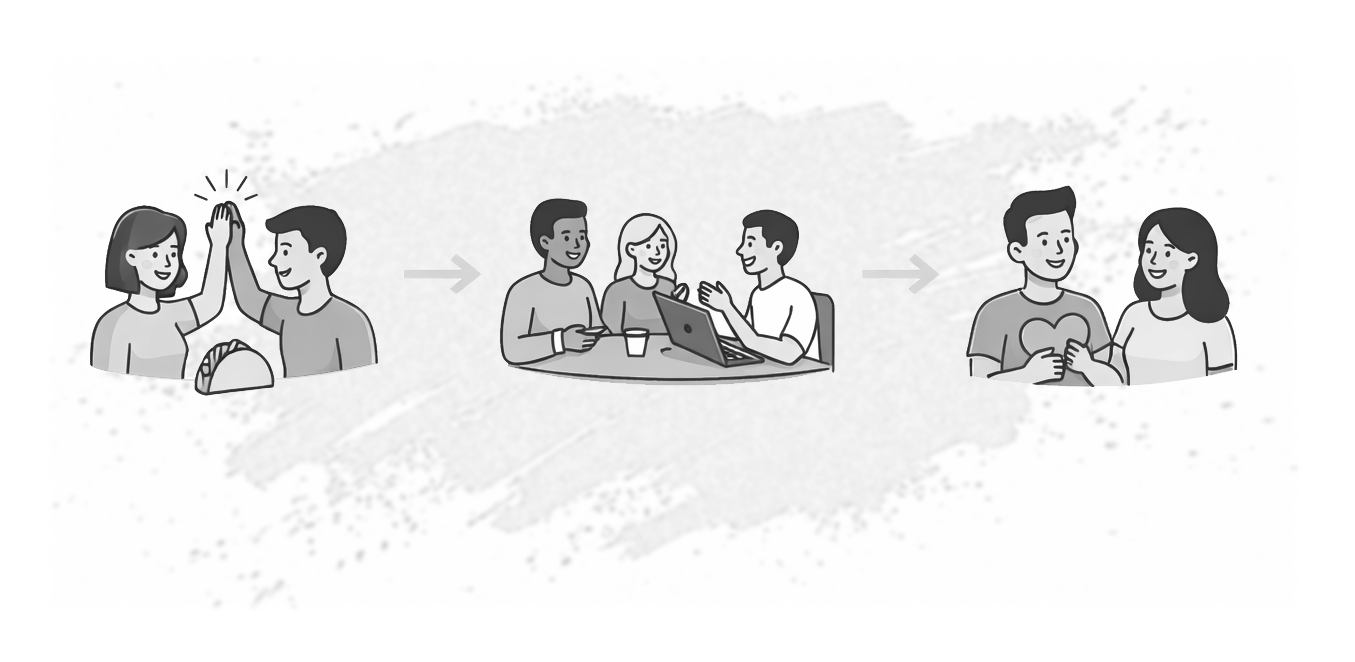
TL;DR: Employee Engagement
- Employee engagement describes our emotional connection to our work.
- Engaged employees are more productive and less likely to quit.
- Recognition, purpose, and growth are necessary to increase engagement.
Today, we're sharing what employee engagement is, how we build it, and its impact on every area of our lives at work.
In this guide
- What is employee engagement?
- What are the benefits of higher employee engagement?
- What are the three types of employee engagement?
- What are the leading causes of low employee engagement?
- What are the 3 pillars of employee engagement?
- 10 employee engagement best practices for strong, authentic connections
- Ideas to increase employee engagement this week (remote and budget-friendly)
- Case Study: Employee engagement and a culture of recognition
- Mistakes to avoid when increasing employee engagement
- Employee engagement: Because work feels better when people feel seen.
- Employee engagement FAQ
🛠️ Ready to put this into practice? See how the right employee engagement software turns these principles into daily habits your team actually keeps.
What is employee engagement?
Employee engagement defines one's emotional connection and commitment to their job. These bonds are built by increasing:
- How intrinsically motivated an employee is to perform.
- How the employee views their growth and development in the workplace.
- Their psychological investment in both individual and collective success.
- Their alignment with the company's mission, values, and culture.
What are the benefits of higher employee engagement?
Higher employee engagement is another way to measure how successful your company truly is, now and into the future. Engaged employees miss work less often, do better on performance reviews, and are more resilient in the face of organizational shakeups.
A 2024 study examining the connection between engagement and better business outcomes finds that strong engagement is related to a:
- 59% reduction in turnover.
- 21% increase in profitability.
- 17% boost in productivity.
Engaged employees also contribute to:
- 70% higher well-being at work.
- 32% fewer quality defects.
- 22% increase in organizational citizenship behaviors.
“Organizational citizenship behaviors” is managerial psychology speak for participation. Pitching in, showing up, volunteering. Early workplace experiments in increasing engagement used gamification to get the ball rolling.
What are the three types of employee engagement?
Engagement is low. Whose fault is this? Before pointing any fingers, identify which relationship is suffering the most. Breaking down employee engagement into three areas helps choose more targeted solutions.
| Work engagement | Level of satisfaction with the resources, processes, and responsibilities associated with someone's role. Confidence in understanding goals and completing work. |
| Organizational engagement | How an employee regards their employer. Their alignment with the culture and core values. Compensation, benefits, and their perception of leadership. |
| Team engagement | Feelings about the coworker community. Collaboration, trust, respect, support, and connections with peers. |
👩🏼🤝👩🏽 Team engagement is key for every type of engagement. And it isn't only done with the usual team-building stuff. Learn more about the difference and see how they add up with these team engagement ideas and activities.
What are the leading causes of low employee engagement?
No appreciation, but lots of (vague) expectations. Those are the biggest causes of slipping engagement, but there are a few others to be aware of.
Lack of recognition.
Employees perceive authentic recognition and appreciation as forms of respect. Meaningful feedback, specific compliments, consistent acknowledgement of contributions.
When we view recognition as respect, it can no longer be mistaken for grade school hand-holding or sugarcoating. It's valuing someone's work and seeing them as a human.
Unclear expectations.
Surveys have shown that only half of all employees strongly agree that they know what's expected of them. No one has a shot at doing their best work when they aren't sure what the ideal outcome should be.
Clarifying objectives and keeping an eye on progress is a must. So are decent peer connections. If half of the workers experiencing uncertainty around expectations felt confident they could simply ask someone nearby, those figures would shift.
Poor work-life balance.
Bad work-life balance results from a few mistakes. Without proper boundaries, employees can be “mentally at work” well into their off hours. Executing tasks without a clear purpose reduces useful output and makes people feel like they wasted time.
Some companies have to stick to a particular schedule and can't offer much flexibility. In these cases, aligning work with purpose and setting boundaries to protect their time are crucial.
Dissatisfaction with pay and/or benefits.
Engagement strategies are unlikely to compensate for compensation. Employees who don't receive adequate insurance, PTO, and other benefits also don't believe their employer cares.
If you do offer market-rate pay, rethink how you package and present everything else. Many engagement boosters fit nicely into a total rewards strategy.
Toxicity.
Hostility, gossip, and favoritism. These are overt forms of workplace toxicity. The ones people actually experience seem subtler, but are impactful enough to kill their desire to succeed.
Heavy absenteeism forks more responsibilities onto other people's plates. Blame culture reduces accountability and makes people feel ostracized. Managers and leaders can behave however they like; the norms and rules don't seem to apply to them.
Personal reasons.
Grief, extra responsibilities at home, and health-related challenges can easily lower engagement at work. Patience and compassion may help, as can increasing flexibility.
What matters most is checking in. Ensure employees are aware and able to take advantage of what resources the company does offer.
😴 Catch them before they quit. Low employee engagement is the source of quiet quitting or resenteeism. This is usually the result of the above factors fermenting into burnout.
What are the 3 pillars of employee engagement?
The three pillars of employee engagement are recognition, meaning, and growth. Together, they create the right environmental conditions for workplace connection.
Virtually all employee engagement best practices serve one or more of these engagement essentials.
I. Recognition and appreciation
Feeling seen and valued is non-negotiable. Nearly every survey or body of research examining engagement points back to recognition and appreciation as the cornerstone.
Hold fast to what you already know about employee recognition. It should be frequent, timely, specific, and true. Peer recognition is real-time positive feedback from coworkers, reducing managerial blind spots and increasing authenticity.
“At the end of the day, people want to feel seen, know their work counts, and believe they're moving forward. That's engagement.”
Doug Dosberg, Founder of HeyTaco
II. Purpose and meaning
Recognition, especially the small, daily stuff, helps reveal strengths. An employee who repeatedly receives recognition for their knowledge on a topic or supportive behavior knows their worth at work. The rapport peer recognition builds across teams is also meaningful and culture-enriching.
From a top-down perspective, communicating values and showing evidence of impact mentally cements one's purpose. Take a manager who consistently champions autonomy as a core value. If they can show an employee how their independent process design contributed to project success, everyone wins.
III. Growth and development
If you value someone, you care about what happens to them tomorrow. Employees cannot feel appreciated and valued if their relationship with an employer stagnates. Growth in the workplace involves both the individual's skills and voice.
Offerings like stretch projects and mentorship are forms of recognition as well as growth and development opportunities. Asking for, accepting, and implementing employee feedback proves to employees that they do have the power to make positive change in the organization.
With this, they'll be much more willing to help develop a beneficial culture.
10 employee engagement best practices for strong, authentic connections
These 10 practices can take a siloed staff perpetually on the brink of quiet cracking and turn them into teams that move with meaning and purpose.
1. Embed recognition into the culture.
This is always first. You cannot foster engagement without recognition. If you're lacking a structured program, consider HeyTaco's clear-cut, budget-friendly, highly scalable TEMPLE framework.
No matter how you go about it, here are the essential elements that make recognition part of a company's culture.
- Peer-to-peer recognition. Tools, nominations, charitable initiatives, and celebrations.
- Manager recognition. Shout-outs, 1:1s, milestone recognition, and using tools alongside teams.
- Creating rituals and habits. Taco Tuesdays, gratitude channels, weekly peer shout-outs.
- Measuring recognition. Weighing the impact and adjusting as needed, recognizing those who give as well as receive recognition.
2. Clear, transparent, consistent communication.
Vague instructions and a general sense of “I'm not sure what they want from me” are leading causes of frozen engagement rates. Use plain language to define all role expectations and project objectives.
Additionally, town hall-style meetings and Q&A sessions give leadership an idea of where everyone stands.
🗣️ Not loud, but always crystal-clear. If communication is a key issue holding your organization back, there are necessary steps to take. From creating communication guidelines to tightening up those meetings, we have 10 positive ways to improve workplace communication.
3. Empower employees to use their voices.
Environments where you're not invited to speak up or feel that nothing you say matters are not positive cultures, ever. When feedback isn't just allowed but solicited and valued, you'll find that those contributions are more relevant and productive.
- Distribute regular surveys and pulse checks. Make sure these do not disrupt workflows or cut into personal time.
- Implement feedback where possible. Give timelines for addressing longer-term issues and explanations for things that cannot be resolved.
- Let employees form committees and resource groups. A culture of support, recognition, and inclusivity is ultimately driven by teams empowered to do so.
- Involve them in decision-making. Set goals and let employees help pave the path toward them. Be open to ideas that improve or streamline processes.
4. Focus on belonging in the workplace.
Rituals and recognition shouldn't be exclusively based on performance. Remote employees will need access to faster, easier-to-execute rituals more frequently.
Workplace belonging is about feeling as though you have allies at work, knowing a new idea doesn't expose you to rejection, and much more. Like recognition, it's the small, everyday acts of inclusion and acceptance that make the difference.
⚖️ Exclusion impacts everyone. Employees are more engaged in workplaces they perceive as unbiased and fair-even when they're not the ones being excluded. Check out more research on belonging in the workplace.
5. Share opportunities for growth.
A lack of opportunity is a moderately insidious employee retention killer. Employees may not be begging for more training or consistently inquiring about promotions. However, if they see it on offer somewhere else, it immediately raises a green flag and lures them in.
Promoting from within is far from the only avenue.
- Career development paths
- Voluntary training and skill-building workshops
- Mentorship programs
- Lateral moves and stretch projects
6. Support work-life balance.
You're likely aware that work-life balance now sits atop the list of candidate priorities. Many would even accept less compensation for greater flexibility. Employees want a say in their schedule and boundaries drawn around their personal time.
Speak to leadership about the chance to offer more flexible work arrangements. Ensure PTO policies are competitive and clear-cut, and encourage employees to take advantage of them.
🧘🏽♀️ Addressing mind, body, and burnout. Wellness program ideas, from gym membership reimbursement to mindfulness sessions, serve as an admirable show of support. However, mental health resources may be the most valuable feature on offer.
7. Highlight the purpose of their work.
Improving communication helps employees get clarity on the “what.” Now they need the “why.” People are straying further from the idea of busywork and don't want to waste time feeling invisible. Ways to engage employees and weave their idea of success into the organization's include:
- Clearing up the company mission. Remind everyone what the shared objective is.
- Individual impact visibility. Data, customer reviews, and other forms of proof influence how people view their roles.
- Link recognition to values. Features like Taco Tags take a positive behavior and make it even more impactful by aligning it with what the company stands for.
- Offer meaningful work assignments. Leading a project, cracking a problem, or updating a process feels worthwhile and shows you trust someone's ability or expertise.
8. Develop manager skills.
A culture with substantial positive peer influence seems to achieve so much of what we want. Yet, employees still remember top-down recognition most. Their self-esteem, enthusiasm, and sense of belonging still rely on managerial awareness, participation, and support.
- Train managers on engagement. What it is, how it will be prioritized, and how they should participate.
- Encourage regular check-ins. Employees should interact with their manager in some way at least once a week.
- Hold managers accountable. They're the ones that carry out many employee engagement best practices. If they agree but don't deliver, they should address it.
9. Track, measure, plan, adjust.
Gumption and optimism may light the way at first. But once the numbers and feedback start rolling in, there's your guide. Use a combination of qualitative and quantitative data to assess progress. Consider:
- Key engagement metrics.
- Setting a regular assessment cadence.
- Benchmarking.
- Action planning from data.
📊 ERGs, referrals, recognition frequency, and more. Read more about the methods and metrics you can use when measuring employee engagement.
10. Start small and build from there.
Small, easy wins. In recognition, celebrating small wins feels authentic and fun, not awkward and hard-won. It's easy for employees to envision getting more small wins. They can sustain it.
The same goes for working on employee engagement. Those quick little victories, like a manager adopting weekly shout-outs or a team sending their coworker funny birthday memes, are sustainable.
Test tools and rituals, iterate on what works, and celebrate everything.
💻 Choosing a platform? Our guide to employee engagement software covers what to look for, how the main categories differ, and the questions to ask before you buy.
Ideas to increase employee engagement this week (remote and budget-friendly)
By far, one of the biggest challenges HR and people leaders face is justifying their efforts in the budget. However, engagement is an area where failure is closely tied to a lack of leadership buy-in rather than money.
Lest you thought that ensuring gift cards and catered celebrations were a must, behold. These engagement boosters are all FREE.
Start everyone's day right.
The beginning of the day is a prime place to add a team ritual. If this doesn't work, at least model the habit of saying good morning to everyone. It opens up opportunities for more connection and is one small step toward a positive vibe.
Offer a networking opportunity.
“Amy in marketing would love to sit in on your project update.” “My old colleague knows all about that. Here's their email.” Invite, introduce, include. It increases one's willingness to participate. It makes them feel they have chances to grow and develop, even without formal actions.
Implement the buddy system from onboarding on.
Remote and siloed people feel less inclined to reach out to managers for minor inquiries or things they worry they should have the answer to. Link two remote employees or people in independent roles. The immediate benefit is that they'll feel less isolated. Additionally, they'll have a coworker they know they can ask for assistance or answers.
Have a stress session.
A positive work culture never means ignoring or denying stress or struggles. At the same time, we want complaints and fears to be openings to solutions, not just venting. Host sessions where people can air out their worries, commiserate, and brainstorm next steps and alternatives.
Make a big deal out of a core value.
Employees can name a company's core values, but do they believe the workplace actually reflects that? Are they consciously aware of when they're exemplifying it? Make it translate to real life. From autonomy to inclusivity, point it out more often. Do it even on the smallest occasions, and watch its relevancy and the team's connection to it grow.
🤑 Personalization is almost always free, too. From hitting someone up at a better time and place to letting them make more decisions. Get more specific ideas for engagement that won't drive up costs.
Employee engagement and a culture of recognition

Remote teams have difficulty building the type of connections that characterize strong engagement. Like many others, email signature management provider Exclaimer learned this the hard way during the pandemic.
The solution was to create a cultural shift centered around recognition. One engineer began using HeyTaco as an informal, fun way to increase positive interactions in a virtual setting.
The practice naturally caught on across the company. Exclaimer created a dedicated "Celebrations" channel, where constant activity became the norm. Monthly themed challenges tied to company values followed.
Staff said they felt genuinely valued through regular recognition, and the team saw cross-department collaboration improve—a big win for remote teams.
Monetary rewards and physical prizes are not emphasized here. When a prize is given, its meaning and cultural relevance are the focus, not the cost.
Mistakes to avoid when increasing employee engagement
Not finding much to celebrate? It can take some time and adjustment. However, these are the main issues that crop up when we drill down on employee engagement:
- Lots of surveys. Especially those that never result in actions, changes, or planning. Participation will begin to drop as these exercises present themselves as a waste of time.
- One-size-fits-all approaches. Quotas, checklists, and obligatory gestures. Every culture is unique. Employees have to connect and belong to this place, not this one and every other one like it.
- Lack of leadership buy-in. From failure to participate to a willingness to understand. Managers have to be willing to model the behaviors.
- Forgetting remote employees. They are productive. They're enjoying flexibility. They're still missing the most essential ingredient: connection.
- Treating engagement as HR's job alone. HeyTaco's white paper, Designing Peer Recognition for Engagement, contains actionable advice for HR and people leaders. The actions in question encourage managers and employees to adopt and drive the plan.
Employee engagement: Because work feels better when people feel seen.
Recognition is the foundation of engagement. It's here that employees start to feel like respected humans at work. If recognition isn't doing the job, it's likely too rare, inauthentic, or inconsistent.
Helping teams adopt a peer recognition tool is a great way to make it a habit. If you're weighing options, start with our breakdown of employee engagement software and what separates tools people use from tools people ignore.
Laura, a manager at Insightly, made peer recognition part of the culture in a few easy steps. First, she secured leadership buy-in by effectively presenting the benefits of HeyTaco as a peer recognition tool. She also tied recognition to the company's core values with TacoTags, so every taco reinforced what Insightly stands for.
Next, it was time to launch. “People were all over it,” Laura recalls. “As leaders, we didn't have to do much.” Within two weeks, employees passed around almost 500 virtual tacos of recognition.
A fast start, and the groundwork for a culture of gratitude. You can see how it's done with your own free trial of HeyTaco.
Frequently Asked Questions
How can startups increase employee engagement?
As with other types of organizations, a strong foundation can be found in a culture of recognition. The key consideration is that startups need to be ready to scale their programs much more rapidly than others.
Some peer recognition tools prioritize scalability for this purpose. Hear how a Web3 security startup scaled recognition using HeyTaco.
Does better employee engagement increase motivation?
Yes, higher engagement is associated with greater intrinsic motivation. That's where employees are motivated to perform because they want to benefit the greater good, or they just enjoy the act of doing.
Employee engagement is not responsible for all forms of motivation, though. It's also not the avenue to take if you want to create a sharp, temporary uptick in productivity. Read more about the relationship between engagement and motivation.
What are the three dimensions of work engagement?
William Khan is a psychologist who many consider the “father of employee engagement.” He asserts that work engagement is a physical, cognitive, and emotional experience.
Physical engagement refers to the expenditure of both physical and mental effort. We see this with both a commitment to showing up and working out solutions to challenges.
Cognitive engagement attaches the employee to their employer. They understand how their contributions impact the organization's vision and goals.
Emotional engagement involves one's sense of belonging at work. Plus, they don't just understand the company's mission; they invest in it as well.
How do you measure staff engagement?
Use a few different methods and channels to measure engagement. The ideal ones will depend on your industry and goals. Options include but aren't limited to:
- Annual and pulse surveys
- Exit interviews
- Turnover and absentee rates
- eNPS scoring
- 1:1s
- Analytics and reporting features
What are good employee engagement questions?
If you want to help measure engagement through surveys, here are several example questions that may yield helpful responses:
- What is the most interesting part of your job?
- How does your role affect company success?
- Is there a team event you'd like to see offered?
- How does management recognize your efforts?
- How would you compare the culture here to other places you've worked?
- What resources do you use to complete your work, and are there any missing?
- What question do you feel is missing from this survey?
What's the best way to engage remote employees?
Emphasizing peer involvement and team engagement over individual connection can yield better results. Interest-based social groups, virtual team building, and peer recognition are all worth a shot.
Onboarding is also a critical phase. Consider pairing new remote hires with a coworker who could help acclimate them to your virtual culture.
 Add to Slack
  Add to Teams