Diego Lugli is the Director of Human Resources at Pirate Ship, a fully remote shipping software company with a pirate-branded culture and over 200 team members. He spoke with Amazing Teams' Una Japundza about how custom avatars, the Kudos Cove Slack channel, and the Pirate Cadet Program help keep customer support turnover in the single digits, well below the industry's 30% average.
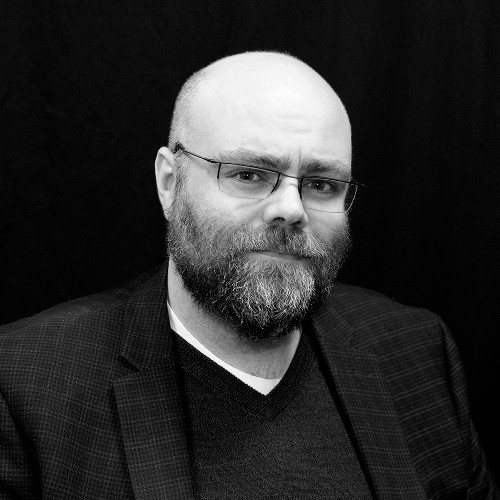
Diego Lugli
Director of Human Resources, Pirate Ship
Ahoy, Diego! Lugli’s Voyage from Burnout to Pirate Ship
Una: For our listeners, can you tell us more about Pirate Ship? What does it have to do with pirates?
Diego: Going back to the founders, when they were brainstorming ideas, they just really liked how Pirate Ship sounded for a shipping company, which is what we do. From there the idea spawned into how we make this a fully branded pirate experience, with the foundational idea being that our vision for the company is to make business fun for our customers and ourselves.
Really leaning into that brand and that voice and that quirkiness, and being a little bit edgy sometimes, a little bit cringy sometimes, just makes doing business a lot more tolerable. During the difficult times, it's always easy to get quirked up when you see a pirate pun or somebody drops a funny meme. I don't know if that was the intention from the beginning, but once the name was picked and the brand was theory-crafted, it just sort of snowballed from there. Now we're all about pirate stuff.
Una: How did you end up at Pirate Ship? What was your road into people and culture HR and then landing here?
Diego: At the time I joined Pirate Ship, I was actually planning to take some time off. This was during the pandemic, and I'd been at a previous company for several years and was in burnout mode. I left and was planning to take about a year off, but I realized I get anxiety when I don't have anything to do, so I spent some time working with nonprofits, including Habitat for Humanity.
I saw Pirate Ship pop up on a LinkedIn post looking for an HR manager. I wasn't interested in titles or money, I just wanted to work somewhere I could align with and feel good about. The posting had a skull and crossbones on it and there were only four or five people at the company, so I honestly thought it might not even be real. I applied anyway, had my first interview, and immediately knew I wanted to work there. I got in and fell in love with the company, and I've been there since.
Una: How big was the company when you joined and how big is it today?
Diego: When I joined in December of 2020, we didn't have 30 employees yet in the US, maybe 24 or 25 — I was probably employee number 28. The company had started growing really quickly because of the pandemic, and it doubled in size in about eight months. Our team in Germany, which handles all the development on the platform, was small too, maybe 15 people. Now we're over 200 across the org.
It was a very small startup feel — the owners were involved in everything, and a lot of the team was young, hungry talent for whom this was their first real corporate job. What was cool is that everybody was hungry to learn, so somebody like me coming in with experience could really help shape a lot of the early thinking about the business. That's really what I love about the startup environment — everything is influential, regardless of what role you're in. I've had such a good time over the last six years. Definitely my favorite place I've ever worked.
HR Department of One & Going Fully Remote
Una: Were you just a team of one when you joined as HR?
Diego: Yeah, originally I was a team of one, and not just in HR — I was handling a lot of things, even IT support sometimes, since we didn't have dedicated IT yet. I remember at one point I had so many monitors and keyboards in my garage that my wife was like, when are you gonna get these out of here?
We went fully remote when the pandemic hit, and there was a time where the intention was to return to an office in Portland, but we got so used to working remotely over two years that we decided it would just scale better as a remote company. Because of our pay philosophy, these jobs don't really exist in other places, so we can bring cool jobs to any area of the country. We're now in at least 12 or 13 different states, including a lot of rural areas where people would never be able to get a job at a company like Pirate Ship otherwise. I think that was one of the original concerns a lot of people had — if you had a rich in-house culture, how do you retain that remotely? It's definitely possible, and I think we've successfully done it.
Una: Just from looking outside in, I would agree. And I feel like you guys can probably teach a master class on how to do that.
Diego: I don't know about that, but we could try. There's been a lot of trial and error with it, but a lot of it really has to do with the people you bring in and how they can organically scale the culture up. It has to feel authentic — I think a lot of times the struggle is when companies try to architect something that can only be done organically, and there's a feeling of fakeness to it. I'd credit a lot of our success to our crew and what they've done to move the culture. It's not just leadership — it's top down, bottom up, like a circle.
Kudos Cove: Peer Recognition at Pirate Ship
Una: I remember talking to one of your pirates in the HeyTaco Hall of Fame about his giving experience. I got off that call and just told my team, this person is amazing, and you can tell the team he works with is also amazing. You could feel the authenticity and genuine enjoyment of who he was working with.
Diego: Yeah, that's part of it. Speaking of HeyTaco, when I joined the company, the taco culture was already there — I remember immediately getting a barrage of tacos. When I first joined, we basically had one crew channel where we were dishing out tacos, but the taco giving was so disruptive it would bury all of our messages. So we ended up making a dedicated channel where that's where you go to give people tacos. It's called Kudos Cove.
That's where all the chaos is — sometimes it's like, where did I get my tacos, you have to scroll through three thousand messages. It's almost a live chat, scrolling quickly because tacos are flying everywhere. It's definitely part of our culture, to the point that I don't think we could ever not have a HeyTaco relationship.
Una: It becomes synonymous. I use tacos in my own text messages to say thank you — it's kind of like ahoy. You say ahoy everywhere you go, and you use a taco to say thank you.
Diego: Yep. And internally, the taco iconography — whether it's the literal emoji or a funny gif of a taco — is always embedded whenever the topic of recognition comes up in a meeting. When you see a taco, we're talking about acknowledging somebody.
The Pirate Cadet Program
Una: Tell me more about the Pirate Cadet Program. What is it?
Diego: The best way to explain it is almost as an internal internship program. The idea came from tackling an engagement challenge on our customer support team, which is our entry-level into the business. In 2020 and 2021 we were hiring entry-level people like crazy, and there were plenty of opportunities to advance as the company scaled. But by around 2023, the pendulum swung the other way — it got harder to home-grow talent into more specialized roles, so promotions slowed down for people who had gotten used to that growth. In our engagement surveys, career growth and development became one of the main focal points, and the cadet program was one of our answers to that.
In a nutshell, if you're a manager, there's always a backlog of things that could be delegated. The cadet program creates temporary roles, usually lasting about six months, where someone on the customer support team can join another team, get dedicated time with that manager and those peers, and get hands-on development in an area they've already identified they want to grow into. We assign real projects — often things that have been on the back burner, or that we'd otherwise hire a contractor to do — and it gives people exposure and context they wouldn't normally get working remotely in just one role.
It's competitive — we post it almost like a real job on an internal board. An employee applies and their manager has to sign off, because we don't want people using it just as a break from their day-to-day job. It has to be aligned with where they actually want to go in their career.
Una: From your perspective as a people team, do you encourage different departments and managers to open up a cadet role every year, or is it more as-needed? How do you ensure the availability of those opportunities?
Diego: This is our second year — we launched it last year with about eight cadets who rotated through as a pilot. It's become part of our annual planning process. When I'm putting together my own objectives for the year, I specifically think about which projects I could bring a cadet in to do. We also have a content and learning team on the customer support side that owns the program and coordinates the pipeline. We're actually interviewing right now for a cadet who'll start in the middle of July and go through November, helping us build out internal training and polish onboarding materials.
Una: Is the goal to eventually bring that person onto your team if you have an open role, or mostly to give them a different area of experience and insight into the business? Or both?
Diego: It's both, actually. A good example is a cadet last year who had a copywriting passion and had written some books on their own, so they joined our team to help with copywriting. After finishing the rotation and going back to their job, a role opened up on the product team managing our customer resources, and that former cadet was hired into it.
You don't always know what roles are coming, but if you can lay the foundation for developing talent internally when those roles do appear, you're going to have more internal options. Sometimes the dream doesn't happen and people go back to their old role, and that's okay too — they're coming back with more skills, and that may mean they pursue something else somewhere down the line. At the end of the day, it's about making sure the person is on a career trajectory that's driving their passion, even if that means they eventually move on because we don't have a role for them.
Una: It's worse if they stay and you're not investing in them and they're miserable — that's way worse.
Diego: Sometimes it can be. And that leads to engagement challenges, less passion for the product, less passion to support customers. We've all been there. That's why career development is such an important conversation — making sure people are constantly being challenged, even when it's not always easy to fit in around work demands.
Una: What has been the reception of the Pirate Cadet program among the possible cadets and your support team?
Diego: Really, really good. We use Culture Amp to measure engagement, and last year our career growth and development score jumped 15 points. I don't want to say the cadet program was the only thing that did that, but it was a big piece, especially on our customer support team, since that team is so large it has a lot of influence over our overall scores. We already have three new cadets who've started recently in some departments, with more in the pipeline for later this year.
Una: How long did this program take to go from conception to rollout?
Diego: We conceived it around 2024 and piloted it very loosely at the start of 2025. Our content and learning team then spent about four months at the end of last year turning everything we learned into a real program, with documentation for managers on what's expected of them — because we really want managers hosting a cadet to be engaged in mentoring them, setting OKRs, holding meetings, and giving meaningful feedback. They created a hub for it we call Crestpoint. If you're a manager who wants to bring on a cadet, you go there and that team walks you through everything.
Una: Is there a whole branding thing too, like logos and stuff for the Pirate Cadets? I figured it's not just some boring font that says the Pirate Cadet Program.
Diego: We're working on that. We use Notion for our intranet, and we have an artist who develops stuff specific to our employment brand — he's busy, doing banners and everything. Everything is pirate themed.
Low Turnover at a Company That Cares
Una: You mentioned your very low turnover on the support team. Can you share more about that — your turnover versus industry turnover, and how you keep it so low?
Diego: I wish I had a perfect answer, but my belief is that we've created a culture where people feel really invested in the work they do. Customer support, especially in a call-center-like structure, is a very stressful job — nobody's ever happy to be talking to customer support, it means they have a problem. So it typically sees very high turnover, usually around 30% year over year industry-wide. Ours has been in the single digits, like two or three percent, since I've been there.
I think a big reason is our values and how we take care of employees. It sounds like a cliché you hear everywhere, but at Pirate Ship it's very legit — I've seen lives changed based on how we compensate and take care of our people, and the vision our founders have for the kind of business they want to build. Even on a bad day, there are foundational roots that keep you grounded, knowing the company cares for you and is constantly asking how to make things better. Things like the cadet program come directly from that kind of feedback.
Una: Well that, and then you add the fun on top of it with all the pirate stuff, right? So now it's like, maybe I could make a little more money elsewhere, but is it actually worth giving up all this awesome stuff?
Diego: Yeah, and the work-life balance too. Even though we work seven days a week as a company, we make it a rule that you're always going to have two days off in a row, no matter what — I've been in service jobs where you don't even know what days you're working. There's a lot of intentional stuff we put in place to preserve work-life balance even as a seven-day-a-week company, and our PTO policies are very generous. That really makes a difference.
Una: With the majority of your team in support and working seven days a week, do you get back to your customers within five minutes of them reporting an issue?
Diego: It's lower than that — you can get a live person within a minute or two. And they've got their own little avatar characters that represent them, so customers are seeing cartoon characters talking to them in pirate puns, shooting gifs, memeing them, sometimes even playfully trolling them. I think that's one of the reasons our CSAT score is one of the best in the industry, and a lot of our growth has been word of mouth — people send friends and family videos of content creators just talking about how awesome Pirate Ship is, unpaid, because they genuinely love the platform.
Una: You have to read the room a little though — if someone's more frustrated, you settle the situation first and then you can throw in the puns.
Diego: Exactly. We have a whole quality assurance team internally that helps our crew learn when to dial back the puns and be more normal, and when to really lay it on because you're having fun.
The Poop Deck: A Deep Dive Into Team Pirate Culture
Una: What are some of the fun pirate-themed cultural things you do? You mentioned the avatars and the ahoys — what else is there where the pirate theme weaves through?
Diego: One of the best places is a Slack channel called the Poop Deck — it's basically our meme deck, though we also share a lot of fun customer interactions there. It's a place where we just joke; if you post anything serious, you're gonna get trolled. It's very easy to get lost in there for a whole day. We also lean into things like Talk Like a Pirate Day, which is a nationally recognized pirate day — that whole week we'll run contests, like a battle station contest where people submit photos of their workstation and we judge the coolest pirate-themed one, or we'll stream pirate movies during the day while people are working. We do similar things for Halloween, the holidays, and we acknowledge things like Black History Month or Pride in our own way too.
But I'd say avatar culture is probably the most potent. We have an artist who makes cartoon, pirate-themed avatars, and when you join the company, one of the first things you do is pick your character. That becomes your Slack icon — you can't have your actual picture on Slack — and it becomes part of your identity at work. We even make an avatar calendar every year with a different theme. People often recognize the avatar more than the face — you're the toaster with the eye patch before you're Joe.
Una: I'm curious about the logistics — are those custom holiday avatars something people upload into Slack themselves, or is it just a collection you don't actually use?
Diego: No, our artist, Constantine, is a machine — he creates the base avatars, mine is a rum bottle, and we always have a pool of about a hundred available, ranging from a mermaid to a lion with a hook hand. New employees pick theirs during onboarding, and it's tracked so we know whose avatar belongs to whom. During the holidays, Constantine literally makes holiday versions of everybody's avatar, and people upload those to Slack for the week and then take them down after. We also change our display names in Slack to something silly during those weeks — you have to double check who you're actually messaging, because you know their avatar, but the name might throw you.
Una: So what was your name last year when your rum bottle went gingerbread for the holidays?
Diego: I don't remember the holiday one, but for Halloween I was Diegore Ugly — Diego became Diegore, and Lugli became Ugly, since our avatar theme that year looked almost like Frankenstein. We also do it for April Fools, and that one's no holds barred — this year was an 80s party with 80s names, and it's a competition to come up with the most clever pun. People come to me a lot for ideas — our COO, Lexi, one of our founders, became the Lexorcist for Halloween. It's the easiest pun, and we get a kick out of it. That's part of the fun.
Upcoming: Scallywag Academy
Una: What is the next thing you're working on with your team when it comes to engagement, culture, and all things team at Pirate Ship?
Diego: One thing I'm working on right now, which is kind of an offshoot of the cadet idea, is something I'm calling the Scallywag Academy — a mentorship framework. I started designing it last year and piloted it with four different people, and now I'm running it with my own team. My hope is that it becomes a 90-day, one-quarter mentorship framework where you talk about career goals and how to build the habits that get you to the next level, with an intentional mentor relationship, outlines, and resources like books, articles, and videos.
This isn't just for entry-level people — you could be senior and wanting to move into management, mentoring with a seasoned manager for 90 days on what builds those skills day to day. I have eight Scallywags right now, and we have our own little corner of Slack where we share stuff. I've built relationships with people on other teams I never would have had a chance to work with otherwise. It's still in beta, but I'm excited to keep polishing it.
Una: That sounds like a really fun project, and a great opportunity for people to learn from others in different areas.
Diego: It's also not a huge amount of work — maybe an hour every two weeks for 90 days, six sessions total, with a very easy framework any leader could plug into. But being able to sit with experts in different areas and get their thought leadership one on one is pretty huge for anybody hungry to grow.
Five Tacos to Share
Una: As you know, with HeyTaco you have five tacos to give out every single day to appreciate people. So my question to you is, who would you like to give your five tacos to today, and why?
Diego: I'd give them all to you, Una. When we first messaged, I was just asking you questions about the store and how we could do some stuff with it, and it turned into finding out we both lived in Salem at one point and actually had a colleague in common. I want to acknowledge you for opening up this opportunity I never even expected — it's been such a pleasure having this conversation with you.
Una: All five! That's amazing. I appreciate you taking the email and being up for a new adventure. This has been so fun, and the things you're working on at Pirate Ship are exciting — I'm genuinely excited for the people on your team who get to enjoy these opportunities. I'm a little jealous of the pirate theme, honestly.
Diego: Thank you so much. And we love the tacos too — turns out pirates eat tacos. A lot of tacos. Thank you for having me, have a great rest of your day.