Julie is the Head of People and Aaron is the VP of Agentic Products at Rocket Money, the personal finance app. They spoke with Amazing Teams' Una Japundza about why most core values projects fail, the difference between values and principles, and how interviewing 53 employees surfaced three principles that describe what is already true about Rocket Money's culture.
Julie and Aaron also share how they narrowed ten patterns down to three, why naming matters, how a launch video at Team Week gave the room goosebumps, and what comes next to keep the principles alive in hiring, onboarding, and everyday Slack conversations.
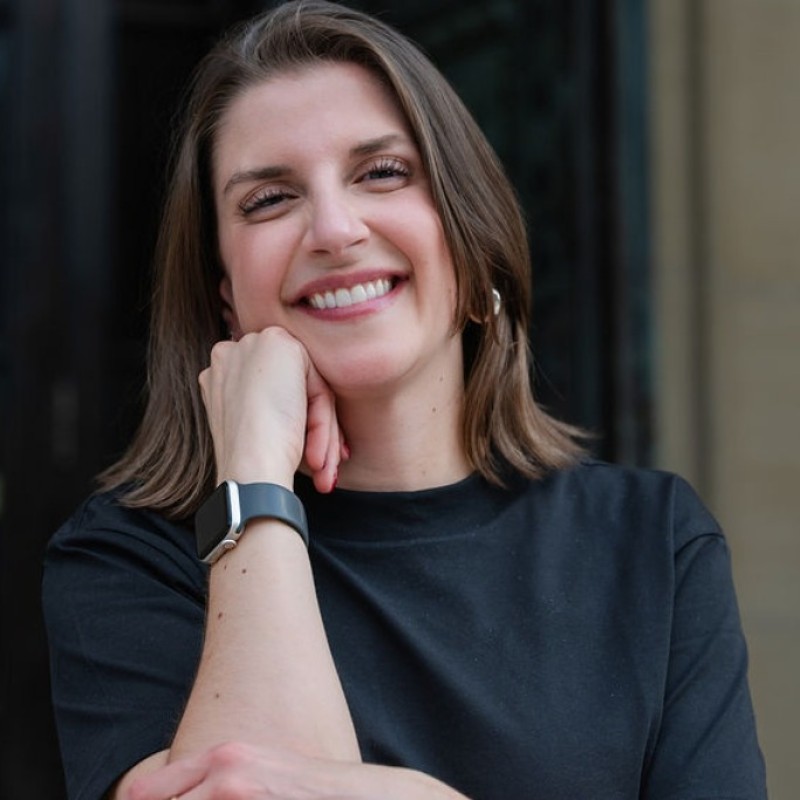

Julie and Aaron Introduce One Another
Una: I'm going to start this a little differently. Usually I introduce our guests, but I'd love for the two of you to introduce each other. Julie, can you tell us who your colleague Aaron is?
Julie: Aaron has been a driving force at Rocket Money since he joined, and he's been a mentor of mine because of all the work he has done at previous companies. Not a day goes by where I don't reach out to Aaron to get his advice on something, and that's why I invited him today.
Una: Aaron, tell us more about Julie.
Aaron: Julie is our Head of People at Rocket Money, and she was the first person I wanted to become best friends with when I joined the company. As soon as I had the chance, I insinuated myself into that group and said, just so you know, we're going to be best friends. Ever since then, we've been hatching plans about how to retain what's great about the culture and unlock new possibilities for how we work and collaborate together.
Una: Julie, how does someone who founded a startup and worked in strategy and operations for big companies become a Head of People?
Julie: It was a winding road. I never thought that would be a function I'd be excited to take over. To me, a people function was very administrative, with a lot of processes to build and follow, which is not usually my cup of tea.
But there's a red thread I've followed in my career: building community and engagement, and taking information, distilling it, and making it clear to everyone. Both of those work well in the people function. I started in operations and BizOps for Walmart e-commerce, specifically strategic planning. We were hiring a lot of people really quickly, and they needed someone to help with employee engagement and make things cohesive, so I started that brand new function at Walmart. From there, it led me to Rocket Money to lead the people function at large.
Una: Aaron, how does the founder of an organizational design consulting firm end up as VP of Agentic Products at a personal finance company?
Aaron: I've asked myself that same question from time to time. In all the work I'd done around ways of working and the future of work, I was always looking at the levers, and I became more and more interested in technology during the pandemic. We started a spin-off, venture-backed company called Murmur Labs that originally looked at agreements and decision making, and how software could scale better ways of doing that. When AI came onto the scene in 2023, we started playing with that too, which led us down a path toward how AI may augment and change the way people work and collaborate.
When we decided to find a place to land that team, I ended up in a text thread with my old friend Haroon, who started Rocket Money. We'd been on boards together and spent a lot of time together over 15 years. He said, what if you came in here and wrote your own ticket for the future of agents in the world of finance? As a lifelong consultant, I always had this dark fantasy of going somewhere and putting this stuff into practice where you're the one on the hook. It felt like a unique opportunity, so we brought the whole team over.
Una: Eight months in, you're not consulting, you're on the hook. Would you recommend it?
Aaron: I kind of love it. You're still a consultant and a coach if that's your brand, but you get to embed and think more deeply about the system, the way you probably thought about your own consultancy. Moving into a system with this much density of character and quality of people has been super fun. I'm having a blast.
Post-Acquisition Values Confusion
Una: Julie, take us back to a little over a year ago when you joined Rocket Money. What was the state of the values, and what made you decide to take on this pretty big project?
Julie: When I joined, I did a lot of listening tours to gather as much information about the company as I could to shape the strategy. For context, Rocket Money was previously Truebill, which was acquired by Rocket, so Rocket had its own set of philosophies. Truebill already had its own way of working and a set of values that was on the Rocket Money website.
The question I was trying to answer was, who are we? In the day-to-day, what's the culture here? Because there was a culture. As soon as you get into Rocket Money, you can feel that people are gathered around a common mission, and the way we do things is very unique. But I couldn't put words to it, because the six values on the website were a little generic. Most people didn't know they existed. And some of the Rocket principles being pushed from the top down were sticking and some weren't. I knew something was missing, so I contacted Aaron.
Una: A lot of people want to start a project like this, but it can feel abstract and they don't know how to get started. How did you two start co-creating it?
Julie: I knew Aaron had done a ton of this work as a consultant. We hopped on a call and I said, I can't put words on how we do things here and I think we need to, because it's special. I want it to be authentic, and I want it to stick with people, so if we asked, who are we, people could just come up with it. I'll let him share the answer he gave me, because it was really good.
Values vs. Principles
Aaron: I said I don't believe in values.
Una: Say more. You're about to shatter the beliefs of thousands of companies with values on their website.
Aaron: It's not the concept I have a problem with, it's the name. Values are a personal condition. What you value is something you hold in your heart and mind as an individual, and you can't tell someone to value something else. In an organizational context, we don't really have values. The organization is an emergent phenomenon of a bunch of individuals. When people hear, this is what we value, it already feels separate from them. Are you a we? With principles, it's, this is how we like to approach things.
The second thing I brought up is that most values projects are doomed because they focus on what we want to be true instead of what is true. I've been part of many values projects at crazy scales where we sit in a room and dream up how we wish things were, then make t-shirts and coffee mugs and posters, expect everybody to behave differently, nobody does, and everybody gets mad. So we said, this is a 10-year-old company. What is amazing, different, and unique about the way we work that we want to capture, bottle, and protect over time? That's what's already happening in the system.
If there are things we want to be different, that's fine, but those don't go on coffee mugs. Those are things we need to demonstrate, model, reward, encourage, and tell stories about. That's a separate project. For this one, could we reach into the system, ask people to tell stories about what makes this place exceptional, and put words to that?
Una: It sounds like you'd recommend this approach to a company that's been around a while and has something special to preserve, versus a year-old company with 10 employees. At some point someone has to say, these are our principles. When does that happen, and when does it become something the team expresses?
Aaron: It's a dance. Think about your own family. It has principles, values, and ways of being, but did you write them down? Not really. They happen in social interaction and coordination. The same is true of a startup. Just by virtue of who's in the room, things will emerge, and it's perfectly reasonable for founders or the people who hold power in the system to write down some things they care about early on. That stuff will almost be true anyway, because it's part of the fabric of that community.
But it's interesting to be in the dance with it over time and ask, what is emerging that we want to articulate? What's coming up that we don't want? That's the whole thing with complexity: what do I want more of, what do I want less of, and what happens when I poke the system or reward it? As we've talked about many times, this is like gardening, not like fixing a watch.
Julie: Things also evolve with the people you're with. At my startup, when we were first hiring, my co-founder and I put a set of values on LinkedIn because we wanted to have a personality and explain who we were. Over time, as you hire more people, it shapes a little differently. You could almost come up with an updated version of your principles every year, because of the people who bring them to life.
Una: At HeyTaco, we have our values, but the only one we actually bring up all the time is do the right thing, which is really a principle. When we have a tough situation, we ask, what's the right thing? And the right thing just emerges. There's a connection between teamwork as a value and be a teammate as a principle, because the principle evokes the behavior. So Aaron gave you this great insight. What did you do next?
53 Interviews
Julie: We went on a roadshow to talk to people. We didn't sit down and ask, give me three values you think are Rocket Money. We captured stories from people across all tenures, levels, and teams. We ended up interviewing 53 people and asked three questions.
The first was, tell me about a time an interaction with a colleague or a leader made you feel, this is why I work here. The second was, what is something in our ways of working that you find really unique to Rocket Money, that you've never seen or done before, and that you value? And the last was, if you brag about work to your friends, what do you brag about? All three poke at different things, and everybody had something different for each question.
Una: You obviously have way more than 53 people. How did you pick who to interview?
Julie: A combination of things. We asked for volunteers on Slack and gave people a few ways to share: we filmed people facing the camera, interviewed those who weren't comfortable with that over voice recording, and some filled out a form remotely. We also have offices, so we handpicked some people we really wanted, including the founding team and people who'd really impacted the business over the past few years. I didn't want only new hires, because I wanted to understand the journey: what you feel when you come in versus someone who's been here for 10 years. It was pretty organic, but some were handpicked.
Una: How did you decide on those questions? Aaron probably had something to do with that.
Aaron: I'm really drawn to Dave Snowden's work with Cynefin. When you try to understand complex systems, you let the system tell stories, categorize itself, and make sense of itself, instead of studying it from the outside looking in. So it was, let's go find out what the stories are, and the stories will tell us what is true, going in without any assumptions. To Julie's and Haroon's credit, I just had one question in mind. We found three different ways to get the stories, and it ended up being a richer data set.
Una: Is there a story or two that kept popping up?
Julie: A few people told versions of the same story: I was less than a year into the job, in a room with Haroon and people who'd been here much longer than me, and I came up with a thought that contradicted some of what was being said. People heard it, they did something about it, and they told me, that's great, just run with it.
Those stories fed our very first principle, the best idea wins. The underlying feeling was that everybody was welcome to bring something to the table, and if it was the best thing for our users and members, we would just do it. People felt like there was no lane and no hierarchy. That came up the most out of the 53 stories.
Aaron: There were so many stories about people cutting across parts of the organization or moving up and down it to accomplish something. It felt very porous and flexible, and that's largely true. I've experienced it in my brief time here. If you want to advocate for something or go find out, there are no borders, and people are really welcoming. But you do have to take agency.
What To Do With All That Data
Una: After the 53 interviews, what did you do with the data? Did you use any tools to analyze it?
Julie: We transcribed everything. I didn't want to rely on notes because you always miss the point, so we kept the entire script. First we ran an analysis with AI to make sure it was unbiased and see what patterns emerged, and I blended that with my own analysis because I ran most of the interviews. We pulled out about 10 patterns and highlights, then held workshops to decide which ones we really wanted to hold on to, asking ourselves more questions to distill it down to between one and five.
Una: You started with ten. Why three? Why not four?
Aaron: I don't think there's a right or wrong answer. It's a question of how much room people have to recall, understand, and contemplate different ways of working. I've worked on principles that go up to seven, eight, or nine, but there's a cost. Only one or two come up a lot, and you start to lose focus, so Julie advocating for fewer was really smart.
To prioritize, we asked: if we lost one of these, which would compromise our ability to achieve our vision, mission, and goals? And if we took any of these away, which would make you not want to work here anymore? Pure retention, pure personal delight. That helps you compress quite a bit. I like a lot of what ended up on the cutting room floor, and it's still true in the culture. That's what's fun about doing values work this way: you don't have to worry so much about leaving something off the list, because it's already happening in the system. You're just choosing not to elevate it.
Julie: One more question we asked ourselves was, which ones really drive our success? If you had to define who we are today, which of these principles got us there?
The Three Principles
Una: So what are the three principles you landed on?
Julie: The first is the best idea wins, which means forget about your lane and forget about the hierarchy. If you have something valuable to bring up, just do it. If it's what's best for our members, we'll run with it.
The second is data supercharges conviction, which came from stories about how we engineered our growth without ever losing sight of our mission. You can be so data-driven that you just follow trends and forget who you are or lose your vision. Rocket Money is the perfect blend of those two.
The third is if you see something, do something. It doesn't matter which team you're on. As a people person, I sometimes hop into BizOps or product conversations. We encourage people to identify the gaps and volunteer to help out, and that creates a great blend of community and collaborative work.
Una: Data supercharges conviction. When I tried to remember all three from the video you showed me, that one stuck out. The phrasing is unique.
Julie: We talked a lot about naming, because you want people to remember them. I didn't want to name things and have people forget about them a month later. Our superstar marketing person came up with data supercharges conviction, and I thought it was the best name of the three. We also considered having people at the company name the principles from their descriptions, but we decided to do it organically and only pick brains if a name didn't come obviously. In the end, the names came easily.
Una: It makes me think, in a good way. I had to pause to remember what it actually means.
Aaron: That's a good sign for principles work. If it's too obvious, it's probably not distinct, and if it's not distinct, what's the point? It won't differentiate you. Enron-style values like integrity are so table stakes that they're really boring. What I like about this one is that in week one you think, whoa, this place does a lot of careful testing, A/B work, and discussion about data. And there are people here with really strong opinions about where the product, business, and category need to go. They leverage the data, but they're not run by it. Of the three, it's the most distinct thing about the culture.
Una: It's easy to say, I'm data-driven and just use the data, or, gut is all we listen to. The balance is always hard.
Julie: Aaron, which one do you think is the most true at Rocket Money?
Aaron: Probably data supercharges conviction, but the idea that anyone can challenge anyone or anything and move across the system freely is really true, especially if you pay attention in Slack. So many people are willing to take a stance and advocate for something. It happened to me yesterday: I was talking about a research approach, someone said, I don't agree, and broke down their theory of the case. I said, that's absolutely right, let's go with that. But the data culture here is profoundly unique.
Una: Aaron, you said there might be a gap between what you want to be true and what people bring up. When you did this exercise, was there something you wished people brought up more?
Aaron: This is very specific to my context. We came from an eight-person AI startup, and the tempo and intensity of that space leaves a mark. I was looking for a level of intensity, ambition, and wanting to win. This company has been so successful that, in a way, that's already true, so I had a little phase shift where I asked myself, do I want to hear more aggressive intensity and ambition in these stories? I'm still sitting with that. You're 10 years old, post-acquisition, inside a public company, but there's still so much road ahead.
Julie: I wanted to make sure these principles weren't set in stone forever. They reflect what we want to hold on to today, but the world is changing, and there are things we'll want to change too. There's a balance between what is true today, what makes the company successful and keeps people around, and the change we want to drive.
There's a second project Aaron mentioned: identify the things we want that don't exist yet, and drive them. The real test is two years from now. If we interviewed 53 people again, would those things emerge?
Aaron: That's the role of leadership: to steward the company. If you identify those things, you have to figure out how to make them true in the system, not tell the system to do them. What are we modeling? What are we encouraging? What stories are we telling? What are we elevating for more visibility? You do that organically so they become true over time, rather than just yelling at the weather.
Julie: That has been my favorite saying from Aaron. Yelling at the weather. I use it.
Goosebumps: The Big Reveal
Una: When you announced the principles at Team Week and mingled afterward, were people surprised? What was the reaction?
Julie: We could have gone the boring way, with me presenting a set of slides and saying, those are the three principles, now live them. But they already exist, and I wanted to make it fun, and we have the best marketing team on earth for that. They made a video styled as an advertisement for the company.
In a 15-minute slot, I talked for about five minutes about how we got there, because it's important to explain the journey and that we wanted it to be authentic. Then we played the video. It's partly funny, but also emotional, because it includes real stories from the interviews. When the people who gave interviews came on screen, people started clapping and patting them on the back: it's you, that's your story. That gave me goosebumps.
It felt natural and it resonated. The bulk of the work now is making sure the principles keep living in a way that's fun, not cheesy, and not just words on a mug, as Aaron would say.
Aaron: Speaking of mugs, what you're really doing with this kind of work is giving something that's true a handle someone can pick up. Did we make good handles, and do we expose them enough that people know to pick them up? When you're in a one-on-one, a feedback conversation, or helping someone navigate the organization, can you grab one and use it? That's the work that has yet to happen. That's what comes next.
What's Next?
Una: So what's next to keep the principles alive and give new hires that handle?
Julie: We built so much momentum in such a natural way that I don't want it to drop. I see the next phase in three buckets. First, hiring and onboarding: when we look for people, we want them to resonate with these principles. Second, people need to remember them. We put a name on something that already exists, but how do we get people to think about it more and mention it in conversations? The best idea wins has already started happening, but people need exposure to do it more.
Third, I want it to be fun. Our head of design came to me and said, we should give people calculators with conviction engraved on the back, because data has to produce conviction.
Aaron: One I'm excited about is really simple. We're a remote-first company with a very heavy Slack culture, so we talked about creating Slack emojis for each principle, and maybe an animated GIF or two. That gives somebody a handle they can use in the moment: just do it, or remember this. It seems like the simplest possible idea, but I think it will touch the fabric of the organization more frequently than almost anything else we can do. I can drop it on a message to reinforce the idea.
Five Tacos to Share
Una: In HeyTaco, you have five tacos to give to someone to appreciate them. You each get five tacos today. Julie, who do yours go to?
Julie: I'll stay on theme. One to Aaron for guiding this with me. One to Haroon for redirecting us when we needed it. One to our head of marketing for coming up with data supercharges conviction. One to our head of design, who's going to make a ton of good stuff with it. And the last one I'll give to myself, because why not?
Una: You can't in Slack, but here you can, so you definitely get that taco. Aaron, how about you?
Aaron: Fun fact about me: I'm like the sidecar on a motorcycle. I peruse all the wonderful things people have done and dole out my tacos as follow-ups, more often than not, every day. So I'll plus-one Julie's tacos, and because I secretly get more than five tacos a day, I'll give four more to Julie for inviting me on, and to you, Una, for hosting so beautifully.
Una: Thank you very much. It was awesome having you on the podcast. Aaron, so fun to meet you, and Julie, thank you for inviting Aaron to be part of this conversation.