Sam Reilley is the VP of People and Culture at BSC Analytics, a cloud and AI consulting firm with a remote-first team of about 80 people, 75% of whom are engineers working in highly regulated industries. She spoke with Amazing Teams' Una Japundza about why certifications alone don't tell the whole story, how lightning talks and a Shark Tank-style challenge keep engineers building, and how the All Five club turns learning into a company tradition worth a Disney trip.
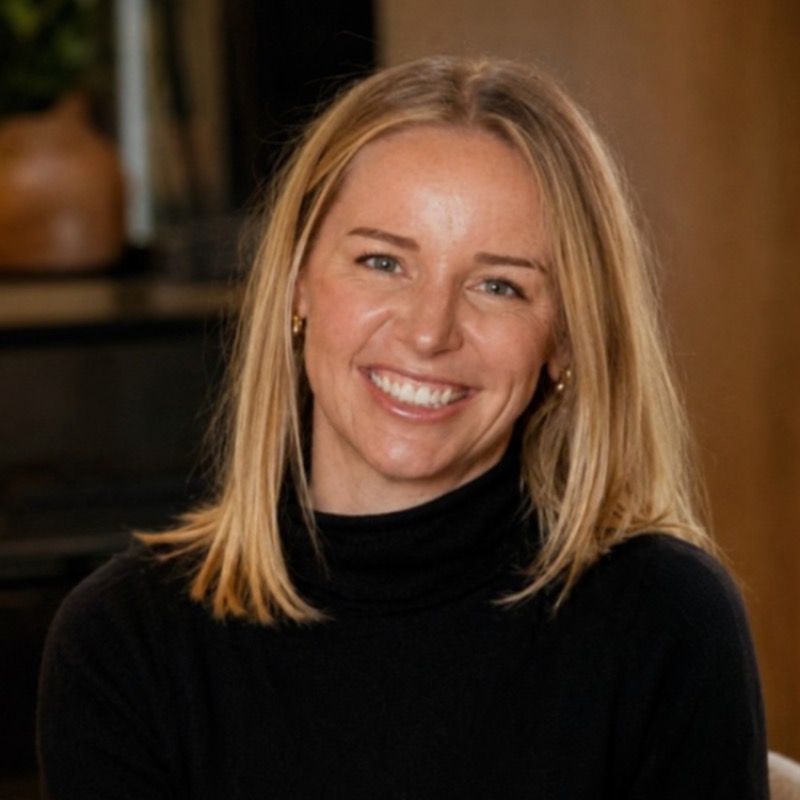
Sam Reilley
VP of People and Culture, BSC Analytics
Meet Sam Reilley: From a Nonprofit in Ghana to BSC Analytics
Una: Sam, tell me more about how you went from living and working in Ghana in international development to running people and culture at a very high-tech company?
Sam: If you would have told me while I was sitting in a meeting with a bunch of village chiefs and elders that I would one day be working for a tech company, I would have been like, no way. I probably would have laughed.
But now, zooming out, knowing where I am, so much of what I've connected to and all of my work is figuring out how you build a culture that speaks to the people. How do you build a business that is made with the intention of the people that it is serving? How do we build a place that people want to come to work at every day? They feel supported, they feel empowered, have the ownership to do what they want, and really push their career.
I think for me, in my career, so much of what I've wanted to do was just do cool stuff with amazing people, and the "stuff" really was fluid. Maybe it was building businesses in rural Ghana, West Africa, or maybe it was sitting in a room full of engineers working in some of the most highly regulated spaces with companies and some of the smartest people that I've worked with. Those are the connections across my career.
Una: Tell us more about BSC Analytics and what you guys do there.
Sam: We are a cloud and AI consulting firm. We work with companies that come to us with their problems. We truly have the best of the best. We put the best of the best in the room to solve their problems and then carry it through completion. The majority of our clients are in highly regulated spaces, and so there is a lot to be cognizant of. They hand us their big bowl of spaghetti to help figure it out, and we execute.
Una: You started at BSC in people and culture, right? How big is your team now?
Sam: One of the board members of the nonprofit I worked for was starting a recruiting firm. I joined that recruiting firm very skeptical of how I would like it. I actually loved it, and through that, met Kenneth Johnson, the CEO here at BSC Analytics, then pivoted into this role. I've been here for five years and have always been on the people and culture side.
When I first joined, it was just a team of 20, and what I really liked about Kenneth, in my conversations previously, is how real he kept it on how he understood the importance of culture and what it really looked like out on the ground. It wasn't just something you talked about; it was something that the people actually lived every day. I think that can be a really big disconnect in some companies.
When I first came on board, it was a team of twenty. They knew they wanted to pivot from working the small-to-medium to the highly regulated space. Now we're even building products, which is super exciting, and it's meant a lot of growth for our team. We grew from a team of 20 to a team of 40 within the first year and then doubled in size from there, and now there are around 80 people on this team.
Una: I'm so curious, from your experience working with village chiefs in Ghana to engineers mostly in the US, what are some similarities between people?
Sam: I think it really comes down to people feeling like they are heard. I am not sitting in my role saying that I can solve every problem that you see every day. But I'm going to listen; I'm going to take it into consideration. If I hear it from one person and then I notice it's something that is a problem every day, that feels different.
What's really important to me and across my entire team at BSC Analytics is that we can have the conversations. When people feel like they can't have that, that is a really big culture shift.
Certs, Celebrations, & Lightning Talks: L&D for Engineers
Una: What percentage of your team is engineering? Every time you and I have spoken, you always mention your certifications. Tell me more, why are those important for your company and your objectives?
Sam: Yes, like 75% of the team is made up of engineers. I think learning and development is huge. If you look at historical data and just data across different companies and what really speaks true to a company and what makes a culture great, it really goes back to learning and development.
People have to have that space to continue to grow, especially when you're in tech, and it is changing overnight. Creating a space where they have tools and resources to continue to do that is huge.
When people come on our team initially, we fully reimburse for any certifications and a lot of different learning initiatives. A lot of people are like, is there a budget yearly, monthly? And I'm like, no, go to town, do it. We have a Slack channel where people share the different certifications that they have knocked out just to celebrate them as a team. HeyTaco tacos are being slung back and forth for different certifications.
We also have a lightning talk. This is just a space where our engineers meet on a regular cadence to share the cool stuff that they're doing. We had someone on there playing guitar and how he connected it to coding. Other people are sharing apps that they have worked on the side, things that they have done and implemented in their systems to help in their everyday.
Again, that is cultivating a culture of continuous learning, and it's not just in certifications. I really think it's how your brain is wired. If you're going to put people in positions they haven't touched before, you have to also put levers into play where they can continue to learn.
Una: I presume that when you have a conversation with a prospective customer, and you say certifications help build trust with your clients, right?
Sam: Yes, our average engineer has six certifications. That's insane. Certifications certainly don't tell the whole story, but they help. The stamps of approval to say, I'm an AWS expert, I'm an Azure expert, I have this many certifications in Kubernetes, and I'm a Kubestronaut.
Una: Is there an automation that gives people tacos when they submit something to say, "I got a cert?" How does it work?
Sam: When you get a certification, you get a badge usually issued through Credly or something like that. So you get that, and you post, "Hey, knocked out this cert," and then the tacos start slinging for celebrating. Not automated, just a natural cadence. A lot of it is certs but others are like, "Hey, I just saw this cool new course," so it also just cultivates the conversation around learning.
Una: The lightning talks, how often do those happen?
Sam: We were doing them once a month, and we got so many submissions from engineers wanting to share the cool things that they were doing, so we've upped it to twice a month. They're just an hour. Engineers get five minutes to share what they're doing, and then it cultivates conversations outside of that as well. Todd Bernson, our CAIO, leads the charge from a technical perspective, and anyone can attend.
Looking Beyond Certifications
Una: I know you have a couple of open roles on your website right now. Are you looking for people who are already certified, or people who have an interest in getting certified? What do you look for in new hires?
Sam: What is most important is a high sense of ownership. I don't really care if you're certified. I do want to make sure people understand why we think it's important, and we tie it to our career paths as well.
I have also talked to people who are certified up and down the block and can't do much of anything or hold much of a conversation on a technical level. When I find someone who is just an innate learner, has that high sense of ownership, that is huge.
Sam's Shark Tank & a Very Vegas TacoCon
Una: So you're doing the Slack channel, you're doing the lightning talks. Is there anything else?
Sam: I actually just put together a new challenge for our product. It's an AAI product that we have been building. I built a challenge to get all of our engineers in that system. Not only because it will help it grow a ton and fine-tune the product even further, but also they're going to have to use it, so incentivizing them to get in there and learn it is a huge piece.
Our engineers are put into teams of about four people. What I'm having people do is first tackle it on an individual basis. How can you use this product to solve something annoying you today, or that you see could be automated or expedited? Then they come together as a team and decide which one they should go in on all together. Then they concentrate on that space, fine-tune it, and then we do a Shark Tank-style pitch.
We'll have a panel of judges that will vote, and there's a big pot of cash at hand too, so that helps to motivate people.
Una: When you're strategizing new ideas, you focus them on learning and development. What's your philosophy behind coming up with those?
Sam: Our team loves to connect. We're 100% remote. I'm always looking for opportunities to build that connection. When I can build the connection, and it ties into learning and development, let's do it. Our team is super competitive, so I wave some cash or maybe a trip, and people get pumped, along with the well-deserved bragging rights, which are huge.
At our last TacoCon, which is our company retreat, we had a casino theme, and the person who won the casino night then got to choose someone to wear a taco costume. Just keeping it fun, I think our team loves the ability to connect.
The All Five Club
Una: One thing that has always resonated with me about your approach is that you just start. Sometimes things flop, right? Have you had those experiences?
Sam: Yes, analysis paralysis is for all of us, right? I will fine-tune, and we'll pivot as we go.
Each of these engineering teams reports into what we call a delivery owner, like a project manager. We meet on a weekly basis, and I use them a ton. What's working? What are you hearing back from your engineers? Let's have those conversations in your daily stand-ups.
Back to the culture piece, people feeling heard is big. We kicked off a challenge this week, and I heard some people were confused by the phases, so we ran two workshops to break it down in a simple way. Ear to the ground is really big. Not being afraid to pivot, not being afraid to be human.
All Five is one of our clubs that is learning focused, so people have to get certifications. I just did a big pivot this year, because previously it was getting all five AWS or Azure cloud certifications, and you're put into this All Five Club. You get this sick jacket — it's the same jacket that is given to members of the Five Timers club on Saturday Night Live. We found the person who makes that jacket, and now they make them for us.
Una: A trip to Disney is part of it. You get a jacket and then do you do an annual trip with people who have been inducted into the All Five club that year?
Sam: Yep. Your first year at All Five, there's a jacketing ceremony, and every year there are new members that we're inducting and jacketing. Once you're in the All Five club, you have to keep the All Five status, and you get to go every year. It doesn't hurt that our CEO is located in Orlando and is a Disney freak himself. I can say that lovingly.
It's grown over the years, right now it's around 30 people. I actually broke the All Five down into five separate pillars, one of which still stands as the certification. But the other four pillars pull in so many other things.
Thought Leadership & Expanding Membership
Una: So you have the certifications, you have the thought leadership. What are the other three?
Sam: The lightning talks, public articles, learning and mastery, which is your certifications, leadership, and then collaboration is the fifth one. Just trying to really push that thought leadership to the next level, beyond the certifications, and ensuring that our team is keeping up with all that is developing in tech.
Una: How are you measuring the other four pillars? Certifications are very objective, right? What about the others?
Sam: There's a peer aspect to it. To get a subject matter expert, you're getting a peer recommendation within your team, and outside your team you need examples of how you showcase that and push the mentor aspect of it. It's team-driven, which I think is a really important piece — we're all lifting each other up in our careers.
We also have a thought leadership workshop that our leadership drives. You need to be able to talk the technical and do the technical. What makes BSC the best of the best is the engineers — yes, they can do it, but they can talk about it and explain it in a different way.
Una: You mentioned the subject matter expertise. Is that a workshop as well that you developed?
Sam: Yes, the SME program is one that I developed, and that kicked off this year. They have to get two peer nominations, and they need to be driven by their manager as well. People were going to certain people as the Kubernetes expert, the Linux expert, the Terraform guru, so I was trying to bring some more formality to that.
We gave them their stamp of approval — yes, you're a subject matter expert — but what does it look like beyond that so it becomes company knowledge that people can really use as a resource in their everyday work?
Una: If someone really wants to start some learning and development initiatives, even just one workshop at their company, what advice would you give them in terms of getting started?
Sam: Talk to people. Get your managers who oversee teams in a room. What are you hearing? Where are they falling short? I meet with every single person on our team, top-up, top-down, on a regular basis with no agenda at all. It's just a check-in.
It's super casual, and it's a space where people see that I want to know. But I'm opening the door for when there are problems or exciting things that they want to share. When I have ideas, I put together round tables of people who've been the most vocal about wanting this to change. I use that to totally reinvigorate our bonus program and things. Get in front of people, communicate, ask the right questions, and continue to push so that people continue to come to you with ideas.
Five Tacos to Share
Una: As you know, in HeyTaco, you have five tacos to give to someone today to celebrate them and appreciate them. So my question to you is, who are you giving your five tacos to today and why?
Sam: Brian Dawson. He's the CDO of BSC Analytics, and I think what makes our team and the culture so important is that it is felt across every role at this company. It is not just something we in leadership say and hope is happening on the ground.
I just had a conversation with him this morning about how we're going to strategize around something. I am super thankful to be able to have that for myself in someone that I report directly to, and I think I understand that importance because I feel it in the role that I am in. I want to make sure that that is felt across the entire team.
You can get in the grind every single day, and then you have to zoom out every once in a while. I don't launch a program and say, this is going to be the best ever, and we're not going to have any problems. I want your feedback. What's working, what's not. And when people come to me with a problem, I turn it to them — how would you solve this? Because I want to know. So yes, the five tacos go to Brian Dawson, because he helps push that, and it helps push me in my role every day.