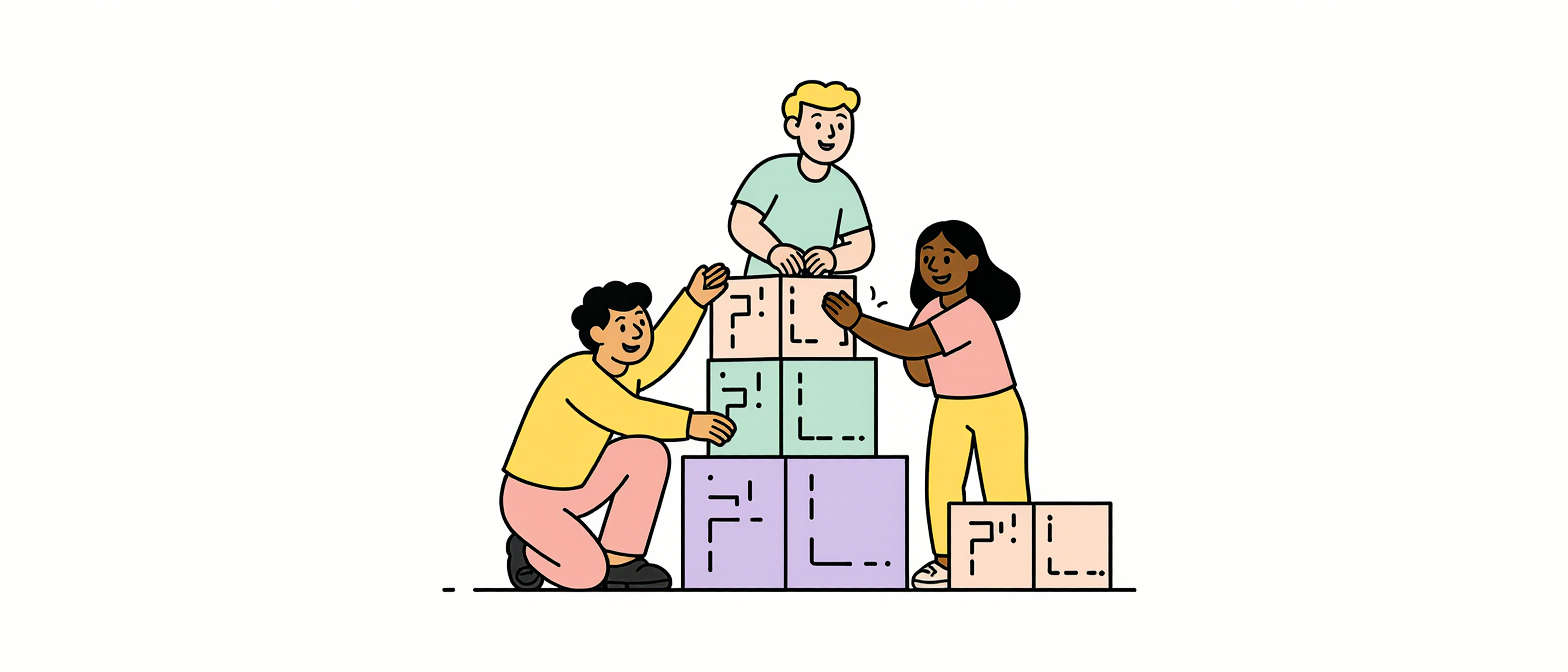

Mentorship gives what we call a “real-life education.” The results are personal and professional growth, greater wisdom, stronger communication, enhanced confidence, and an overall wider net of support.
That sounds like a lot of responsibility for a mentor, no? In truth, both parties in a mentor-mentee relationship have an equally large influence on its success. Careful focus on how to be a good mentee is just as key as what the mentor ultimately shares.
Today, we have actionable tips for both. We’ll tackle how to be a good mentor and mentee, plus questions to drive meaningful conversations and ideas for setting goals together.
What makes a good mentor? (And how to be one)
Much like a leader in the workplace or community, the mentor is there to guide people forward. What makes a good mentor is the unique support they offer and their ability to challenge the mentee. This is what prepares their partner for growth.
Actively listen and stay present
In the quest to help someone move onward and upward, we can find ourselves in a bit of a rush. We may also dedicate ourselves to pre-formulated lists of topics and tips to knock out.
When you notice this happening, take a breath and drop back into the present moment. Listen carefully to what your mentee is saying, their body language, and their attitude. What they’re sharing now should naturally lead to what you share next–not your own agenda.
There will be opportunities for you to cover the areas you’ve identified. But first, really hear them out.
Share experiences, not just advice
Advice is nice, but experience is relatable. Experience also has empathy and advice tucked right inside of it.
For instance, a mentee expresses some trouble meeting tight deadlines at work. The mentor, having encountered this in the past, shares in their feelings of how stressful it is. They recall a specific instance where they alleviated this stress by breaking down their task into smaller steps and asking for help when they hit a wall.
The results are:
- The mentee’s feelings have been validated
- They’ve received empathy
- They know more advanced professionals have been through this, too
- They now have ideas for handling it in the future
Experiences are memorable, illustrative, and infinitely useful, so use them! Willingness to share personal, firsthand experience is one of our favorite good mentor qualities.
Foster independent thinking
We already know mentees are not our carbon copies. Fostering independent thought meets mentees where they are and draws out the results of mentorship long term.
Start by asking more open-ended questions. (We’ll share some coming up.) After, challenge any assumptions they may express and pose alternate points of view or potential outcomes. Ask them follow-up questions that may lead to some self-reflection surrounding their beliefs.
The mentee gets to experiment with and feel more curious about their own thoughts. They’ll walk away with more creative problem-solving and critical thinking skills.
Celebrate both big and small wins
Everything from trust-building to motivation hinges on which parts of a mentee’s progress the mentor acknowledges. The short answer is to celebrate anything that warrants even a tiny bit of positive reinforcement.
Be at the ready with verbal praise when they say something that aligns with the goals you’ve set together. When they approach a challenge with a new line of thinking, call that out and congratulate them.
Just don’t wait until they make big strides. Find chances to cheer the whole way.
Champion their growth
Speaking of cheering mentees on, it’s the signs of growth that you want to champion most. This is the most essential piece of advice for those learning how to be a good mentor at work.
Some ways to do this:
- Identify and help build on their current strengths
- Introduce them to new experiences or challenging assignments
- Show confidence in their abilities
- Help them locate resources or training to continue growing beyond your partnership
There are two more important ways to do this that warrant their own sections here: networking and feedback.
Offer honest, kind feedback
A mentor’s observations and perspectives are a large part of this partnership’s purpose. How do you keep feedback sensitive and useful at the same time?
Be very specific. This prevents the mentee from feeling what they did was “all bad” and replaces it with “this one little thing needs work.”
“You weren’t riding the bike correctly” can make them think, “I’m bad at riding bikes.” But “Your weight distribution isn’t quite right when going downhill” makes them think, “I have to remember to shift my weight to the rear when descending.”
Now, a mentor can show empathy and offer encouragement through experience. “I used to do that too; even took a nasty spill.”
Cap it off with expert guidance that reassures it’s all fixable. “Relax your arms a bit and focus on centering your weight. You don’t need to shift back very much at all.”
Encourage connections and networking opportunities
Connections are among a mentor’s greatest resources and should be shared where possible. Choosing to mentor someone is essentially investing in their growth, so introduce them to a new circle.
Informal meetings, industry events, and direct introductions are all great opportunities for mentees. Mentors should also direct mentees toward conferences, speaking events, and other groups and gatherings where they can learn or meet others with the same interests or goals.
But before all of this fun stuff, here are a few tips for making sure a mentee is ready to network:
- Identify why exactly it’s of benefit (“Dani knows a lot about culinary schools in our city and what they require.”)
- Give them some insider info that will help them make a good impression (“Rafe isn’t a big fan of firm handshakes.”)
- Help them practice how they would introduce themselves and what questions they would ask a new contact
All of the above will let the mentee know you’re looking out for them. Striking out with someone in a more senior position on your side is an incredible confidence booster.
How to be a good mentee
Being a mentee isn’t passive—you drive the relationship, too. One of the biggest misconceptions we have about mentors is that they are like teachers. But mentors are something more because they have rich, individual experience. They’re experts without the structure or borders of traditional education.
Here’s how you take advantage of that as their mentee.
Come prepared with goals
Later in this article, we’ll share how to create mentor-mentee goals together. However, those will be relevant to or build off of the goals you set before your first meeting.
Take 15 minutes and brainstorm. Write down everything you want to get out of having a mentor, taking care to stick to the purpose of why you’re meeting. For example, someone has enlisted a mentor to help with professional growth. Their goals can include:
- Improving communication–Learning how to approach clients or stakeholders and gaining new strategies for interacting with colleagues
- Enhancing leadership skills–Capitalizing on your strengths in ways that can motivate teams of people
- Time management and organization–Learning how to prioritize and organize tasks for greater efficiency and preparedness
- Gaining confidence–Getting effective techniques and helpful feedback that instills pride and in abilities
Mentees don’t have to map out their whole partnership. They just need to be clear on why they want a mentor in the first place.
Be open to feedback (even when it’s hard)
Look, no one really enjoys hearing what’s wrong with them. But if a mentor is delivering feedback appropriately, there’s rarely a reason to get defensive.
If you’re sensitive, let them know so they can adjust their approach accordingly. For your part, it’s helpful to adopt a growth mindset. This looks like:
- Staying persistent in efforts
- Embracing challenges as opportunities
- Believing that feedback is fuel for improvement
- Focusing on incremental progress, not perfection
Above all else, remember that mentors are often speaking from experience. If they notice a habit or quality they think needs work, they’ve probably dealt with it firsthand. Trust them!
Take ownership of your development
Mentor, not magician. Guidance, not guardianship. Yes, a mentee should derive a lot of value from the relationship, but it never means handing over responsibility.
Hold yourself accountable for the results of your mentorship. Track your own progress, focus on your own goals, and own up to the parts that didn’t go as well as they could have.
This also means giving yourself credit when progress happens. “I couldn’t have done it without you” is nice to hear, but don’t downplay your wins. They are yours, even if you had some help.
Being proactive and using a mentor’s time wisely also falls into this category, but we’ll discuss those in more depth now.
Respect your mentor’s time
Do you need to work on your tendency to overcommit? Have a habit of turning up late or canceling at the last minute? Fond of going on off-topic, free-association tangents? If so, now is the time to get it in check.
Tips for respecting a mentor’s time:
- Always give advance notice of meetings or changes to meetings
- Show up prepared and ready to work on set topics
- Practice active listening and ask follow-up questions
- Take notes, especially if it helps you stay focused
It’s also a good idea to share updates between meetings. This way, they can gather their thoughts and feedback and have it ready for your next meeting.
Follow through on advice and action items
You won’t know unless you try. This is the most important part of learning how to be a good mentee–putting their advice and ideas into practice.
Mentors aren’t there to have someone hear them out. They could become content creators and post their ideas and experiences on social media for anyone to listen to. A lot of them do.
But the mentor-mentee relationship is curated guidance meant to help one distinct individual get ahead.
Bring curiosity and questions to every meeting
Asking questions helps mentees make the most of tailored advice. The questions we share later can help unlock topics that bring powerful insights, but as the mentor provides answers, try some of these. They can help unearth more detail and reveal some hidden wisdom:
- How did you handle that pressure?
- What personal values helped you navigate that?
- What could potentially go wrong if I tried that?
- How could I best apply that to my situation?
These also show the mentor you are engaged in what they’re sharing.
Express gratitude regularly
As a mentee crushes goals and happily measures progress, they should never forget to give thanks.
Like most forms of positive recognition, it helps to make sure it’s specific and timely. This means saying thanks when you feel thankful, not weeks down the line. Then, name precisely what you’re grateful for. “Oh my gosh, when you put it that way, it doesn’t sound as scary. Thank you so much for easing my nerves.”
Thank-you notes and other gestures of gratitude also have a significant impact between meetings. If the sole purpose of the interaction is to give thanks, the mentor can really savor it. “Thanks again for showing me how to break down those project steps. I’m already halfway through thanks to your guidance!”
Ready to make appreciation an everyday habit?
Try HeyTaco free for 30 days. No credit card required.
Try HeyTaco freeEssential questions to ask in a mentor-mentee relationship
Great questions make great conversations—and lead to real growth. The questions below help us get to know one another, prevent meetings from going stale, and act as entryways to the guidance that gets us places.
Questions to ask a mentor
These mentor-mentee questions are great conversation starters that dive into a mentor’s personal experience.
- What was a pivotal career decision you made, and why?
- What skills helped you most at my stage?
- How do you maintain work-life balance?
- What do you do for continued learning or growth?
- What was the biggest challenge you didn’t see coming?
- How do you handle setbacks and failures?
- Do you have a personal process or system for managing tasks?
- What would you do differently if you were starting out today?
Questions to ask a mentee
The best questions to ask a mentee familiarize mentors with what they hope to get out of the partnership.
- What are your short- and long-term goals?
- Where do you feel stuck right now?
- What do you feel your biggest strengths are?
- Where do you currently get the most support?
- What skills or experiences would you like to develop?
- Is there anyone in your field whose path you would like to emulate?
- What feedback would be most helpful for you right now?
- How would you hold yourself accountable for meeting goals?
Setting mentor-mentee goals together
A distracted mentor or pessimistic mentee can slow progress, even if just for one meeting. Miscommunications happen, and paths diverge.
Where do you find the common ground to get back on track? Goals. Clear goals help both sides stay motivated and aligned. Here are a few ways to handle mentor-mentee goals.
Use the SMART framework
Most of us are familiar with the SMART method–that’s Specific, Measurable, Achievable, Relevant, Time-bound.
SMART goals will make progress more visible. The framework also helps with organizational skills and is a good strategy that mentees can deploy for problem-solving moving forward.
Balance short-term wins with long-term vision
As we start knocking out SMART goals, remember that these are the short-term mile markers on a path that is intended to fulfill a long-term vision.
For example, if the goal is leadership development, every little win should align with the ultimate goal of being promoted to management. The little wins need to fit on the roadmap to larger, overall success.
Revisit and revise goals regularly
New information, perspectives, and industry contacts can influence goals. Some smaller goals can prove more challenging than initially thought.
Never hesitate to revisit and revise, adding new in-betweens, breaking steps down further, or redirecting altogether. Far from being a misstep, these can be signs of a really productive mentor-mentee relationship.
Leave space for both career and personal growth goals
Don’t overlook personal growth’s influence on professional development. If someone needs to work on how they handle conflict or manage time, it will certainly have an impact on all areas of life.
Make every meeting count
The opportunity to be or have a mentor is excellent for expanding skill sets and networks. However, good mentoring relationships don’t happen by accident—they’re intentional, supported by good habits, strong questions, and mutual respect.
Mentors can best guide mentees by sharing experiences, being a great listener, and delivering feedback. Mentees find better success when they get clear on their goals, do their best to act on the mentor’s advice, and express gratitude.
Together, they ultimately show one another how to be a good mentor or mentee.