
One specific area where invisible work is a good thing is rolling out a peer recognition tool.
TL;DR
- Recognition without rollout requires tools embedded into workflows.
- The no-rollout recognition model works better for building habits voluntarily.
- Launch campaigns and big moments add pressure and fizzle out.
Why recognition without rollout is the way to go
The no-rollout recognition model is gaining traction because it introduces and builds a habit casually. Launch moments, campaigns, and new system instructions only raise awareness of A Thing Happening On a Day.
If you're launching a program where people earn points they can swap for gift cards each month, they might need those instructions. But if we're in the recognition game to enrich the culture long-term, it has to be a daily occurrence.
Three reasons rollouts kill momentum
Let's take a more critical look at why you may need to ditch upcoming rollout plans.
1. Announcements get momentary attention, don't build habits.
Getting someone's attention and changing someone's behavior have little to do with one another. Letting someone observe and participate on their own reduces the chance they'll be over it by week three.
2. Did it once, moved on.
Formally introduce recognition tools, show people how to use them, and they'll check that box for you on launch day. After all, you essentially assigned them a task. Recognition without rollout works because they choose to use it after seeing the benefits (good feelings).
3. The process felt separate, like extra work.
Anything that pulls a remote employee out of their workflow or the conversation adds friction. Now they have to take a formal action to share in recognition. Ask yourself how many formal actions and extra logins have benefited the day-to-day culture so far.
The solution? Frictionless recognition
Moving forward, take a UX-centered approach to appreciation. Zero decision-making that's obscured by extra options. Frictionless recognition has a few nonnegotiable qualities:
- It takes seconds, if that. There's no deliberation window.
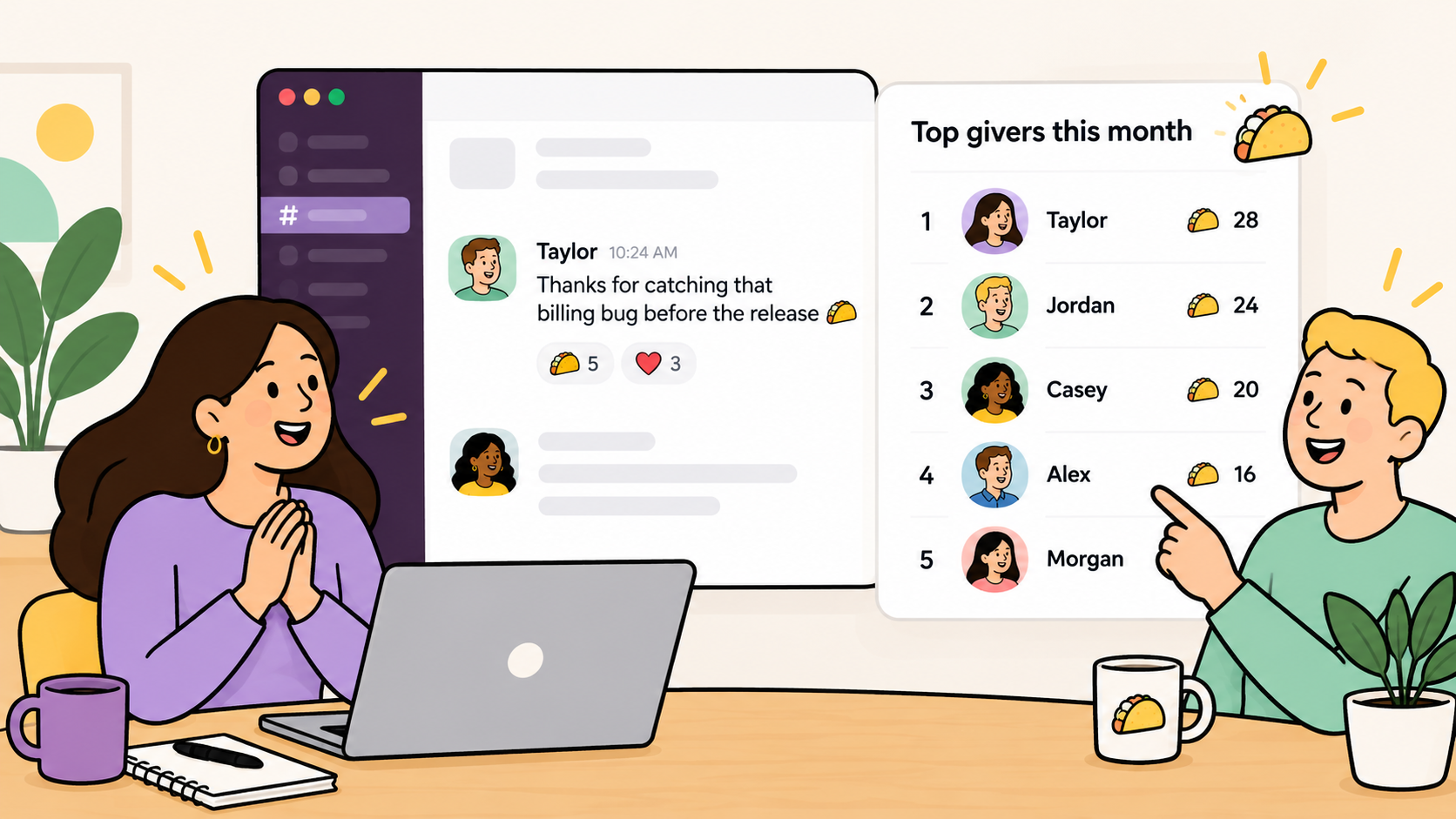
- It happens where the people are, like Slack or Teams.
- It requires no training. If it's not easy enough to figure out, it won't happen daily.
Ready to make appreciation an everyday habit?
Try HeyTaco free for 30 days. No credit card required.
Try HeyTaco freeMyths about recognition without rollout
It's understandable if you're not super enthused about just winging it. But you might be surprised at what concerns end up not mattering so much in the end.
"I need more leadership buy-in! I'm hoping a big launch will seal the deal."
You know what? Understandable. Leadership buy-in is important. But what if the tool was so informal and lightweight it didn't matter if the CEO was the first to be seen using it? What if it was actually more attractive because peers were spreading it around?
"They're not going to use it unless I show them what/where it is."
Feel free to show them by using it instead of commanding their attention to explain it. In the long run, people won't use it just because you pointed to it. They'll use it because it's sitting right there where they already are.
"The rollout is part of my plan to ensure the program is meaningful."
Spontaneous positivity is meaningful. Authenticity is meaningful. You can model intention and specificity, but you cannot structure feelings and memories that are meaningful. Try tailoring some meaningful rewards to the team once they adopt the tool.
"If you make it that easy, it won't feel important."
If you brush your teeth really hard for twice the time today, does that mean you don't have to brush tomorrow? Frequency outweighs effort here. Frictionless recognition stays very valuable because we absorb the benefits–directly and indirectly–every day.
(At HeyTaco, we also create a daily taco limit to keep the economy in good working order.)
How to nail the no-rollout recognition model
Build every part into workflows.
Forget the platform and focus on integration. Recognition should be or feel native to your communication or project management tools.
Show, don't tell.
With more autonomy, remote workers are used to picking up cues and seeking out what they feel they need to know.
We're not making this up; organizations do it all of the time. Element Technologies has used HeyTaco every single day for the better part of a decade. Their CTO, Craig, never instructed them to because the goal was to amplify a bottom-up recognition culture. "Just start doing it yourself, and people catch on," he assures.
Make it easy and socially acceptable to repeat.
Another way to regard friction is overthinking. If you start informally recognizing people for small stuff, the stakes are lowered.
Have some fun.
Many tools use gamification, which helps establish rituals. "Fun" in daily recognition is more about team-specific language, shared values, and inside jokes.
Friction-free recognition that's easy in theory and practice
Recognition without rollout is recognition without resistance. People can't oppose what you didn't impose. They're either into it, or they're not, and HeyTaco has a daily engagement rate of 67 percent. Every day, nearly 7 out of 10 people with HeyTaco recognize each other.
Like those odds? Don't say a word. Send your first taco now and start building a daily habit.
"I like that I can acknowledge people when they do something good. The process is quick, easy to use, and seamlessly integrated into Slack. HeyTaco makes giving recognition fun!" —Alex D., Community Engagement & Happiness Manager