
What's worse for remote employee retention and engagement: never being praised, or feeling skipped over while others get the praise? Zero recognition only speaks to a company's culture. Biased recognition can feel personal. It can communicate that you, as an individual, aren't worthy of recognition.
TL;DR
- Employee recognition bias happens when only the most visible or self-promoting people get praise.
- It's more common on async teams, where some contributors are rarely present in real time.
- Peer recognition is more specific and timely, dissolving biases and broadening what's praiseworthy.
Employee recognition bias in modern workplaces
Recognition bias occurs when praise is based on visibility and social presence. These days, it's not uncommon to feel like your top performer is a relative stranger. Meanwhile, the gregarious personality, the person who is practically camping out in Slack, never goes unnoticed. They wouldn't allow it.
If you find both–the top performer and digital extravert–in one person, it usually involves self-promotion. They advocate for their output, drop notes and recaps everywhere, and consistently self-review publicly.
It's not fair to ask everyone to do this, of course. Siloed deep workers and remote introverts disengage when you apply pressure. Recognition that's reserved for a self-campaigner or Chatty Cathy just isn't desirable or high-quality to them.
How async team recognition becomes imbalanced
The issue gets even more complicated when async contributors who could be popular, valued, and seen just aren't online when it "counts."
Recognition bias is more obvious to these people, and they may be more understanding and accepting of it. But when they're thinking about their current position and future career, they'll recall:
- How they haven't had a direct compliment from their manager in ages.
- The praise they saw for others on projects they also contributed to.
- Celebrations and recognition in Slack that happened while they were asleep.
- The promotion for someone who is always online at the same time team leads are.
- Hours spent addressing a problem or completing a tough task that no one noticed.
- How their written communication style doesn't fit in or seem as "valuable" as others.
Async teams perform more invisible work than any other kind. Doing work unseen is easier to swallow when everyone's in the same boat. When treatment depends on your time zone, you feel like second string.
Ready to make appreciation an everyday habit?
Try HeyTaco free for 30 days. No credit card required.
Try HeyTaco freeWhy the squeaky wheel keeps winning
Loud participation outranks steady performance on remote and async teams because we're all focused on our jobs. That's the real shame about employee recognition bias–it rarely happens on purpose.
Managers reward what they notice first.
Repetition and frequency matter in recognition, and it works both ways. When certain employees make a habit of surfacing their contributions, it's what gets the attention of busy managers who are fighting burnout themselves.
Urgency gets confused with importance.
Many remote workers have a detailed internal dialogue accompanying their workflow and problem-solving. Take that into public communication channels, and your work will eventually seem more important than others'.
Feedback loops keep vocal people ahead.
If a vocal person gets the attention they asked for, they'll keep repeating the pattern to provoke recognition. They stay in the spotlight and top of mind. This unintentionally holds quiet people down and suggests the spotlight matters more than daily impact.
Peer recognition to the rescue once more
In some ways, a recognition bias is an encouraging sign. What we learned with the squeaky wheel is that the bias survives on habits and feedback loops. Teams that can form these are primed for peer recognition.
- Peer praise is honest praise. Squeaky wheels tell tales of their deserving deeds. Peers can organically witness high-impact acts and share gratitude unsolicited.
- It takes up less energy. Habitual peer recognition is small, informal, and built right into workflows. Reducing pressure increases participation.
- It's the best form of async team recognition. Anyone can validate you anytime. Having work seen and celebrated on the spot isn't dependent on being in the same time zone as a manager.
- It's easier to keep the loops going. Positive feedback loops flourish, closing and starting again in minutes, not days.
- Company culture becomes team culture. Over time, peer recognition grows into rituals, inside jokes, and stronger connections. It makes people feel accepted, no matter how quiet they are.
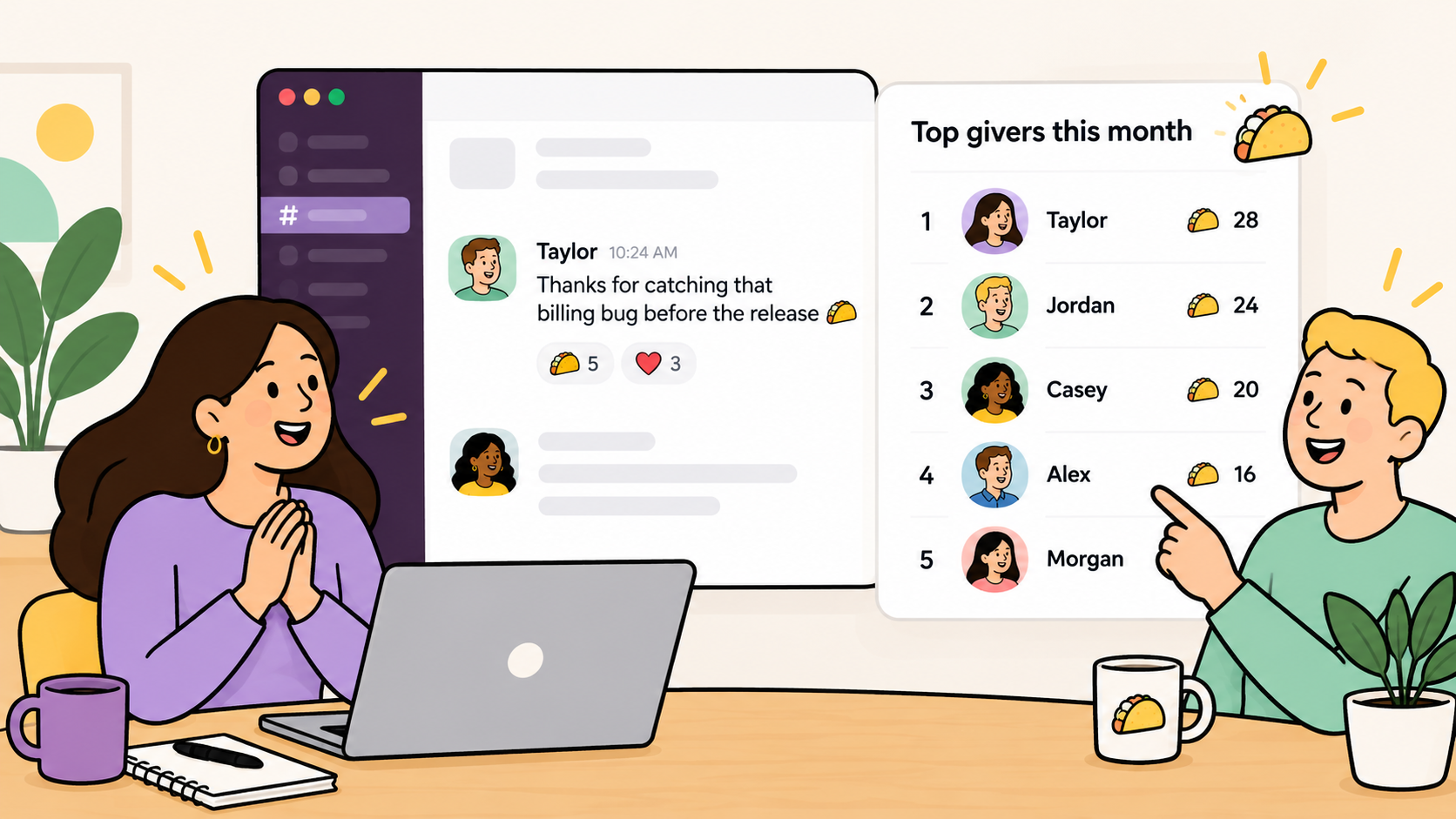
Blast away biases one taco at a time 🌮
Every single employee wants recognition. The squeaky wheel asserts itself differently. A lightweight, chat-native peer recognition tool that feels like it's NBD eliminates the need for all that. It pulls async contributors, introverts, and focused workers into the fold with your personality hires. Now they can all start appreciating each other, and you can take a break to rethink those biases.
More than 3,000 teams worldwide use HeyTaco to democratize recognition without distractions or extra logins. Learn how it works and treat the team to tacos today.
"It's simple, but meaningful — being able to give a taco with a quick message of thanks or recognition helps build a stronger, more positive culture without feeling forced. It makes people feel seen, and gives everyone, from the quiet achievers to the daily rockstars, a chance to be celebrated." —DeAnna R., QA Manager
Ready to make appreciation an everyday habit?
Try HeyTaco free for 30 days. No credit card required.
Try HeyTaco freeFAQ: Employee recognition bias
How is recognition bias different from favoritism?
Recognition bias is less likely to be intentional and often less noticeable than favoritism. The bias arises from visibility, communication, and workflows, not manager preferences.
For instance, a manager heaping recognition on an employee because they went to the same college is favoritism. Focusing recognition on the person who is always first to respond in Slack becomes a bias.
What types of employees are most likely to be overlooked?
Statistically, minority groups are still at a larger systemic disadvantage in the workplace. They're subject to a host of conscious and unconscious biases that impede growth and development opportunities.
Regarding recognition bias on remote-first teams, introverts and async contributors are at high risk. However, any employee who does their deepest work where it can't be seen and doesn't promote what they did is probably being overlooked.
Can a recognition program accidentally reinforce bias?
Yes, strictly top-down recognition programs can reinforce biases held by managers or anyone else heading up the initiative. It tells every observing employee that whatever is popular with that leader is what's worthy of recognition. People who bow out of participation because they don't fit the profile help reinforce the bias.
How can quiet employees get recognition without self-promotion?
Teams and leaders alike need to get into a habit of looking for evidence of contributions. For instance, when peers recognize one another's small acts daily, everyone becomes more attuned to noticing similar acts. Leaders can review document history, code reviews, and other tangible outputs more often.