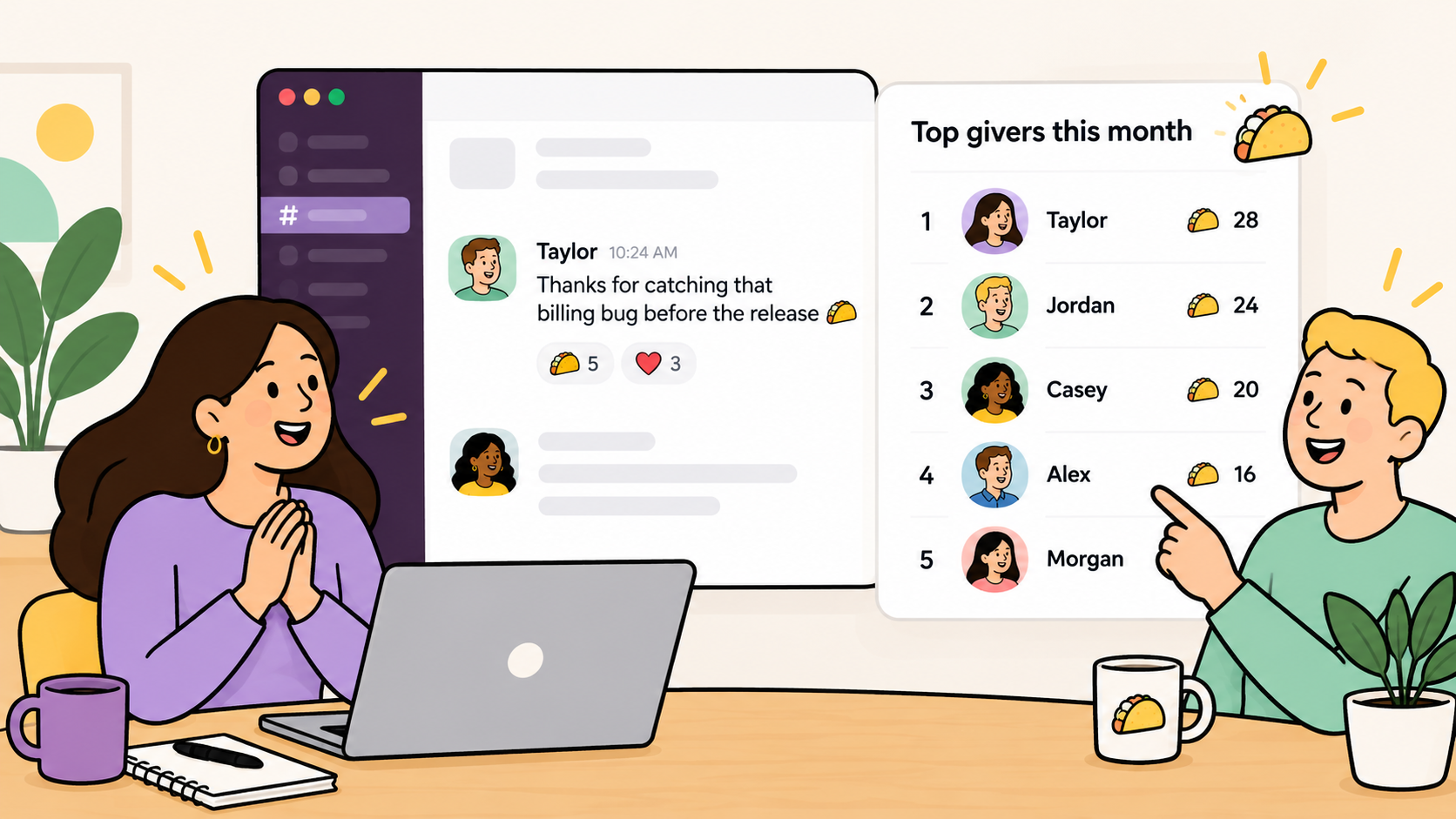

Most companies don't know whether their employee recognition program is actually working. Measuring employee recognition program effectiveness isn't about having a tool or sending more recognitions. It's about what happens across the team over time.
TL;DR
- Having a recognition tool or ritual isn't the same as having a working recognition culture—usage and impact are different.
- A few concrete signals tell you more than a gut feeling: who's giving, who's being left out, and whether it's still happening a month after launch.
- You can get a real answer in a few minutes with the Culture of Recognition Index instead of guessing.
Quick answer: A working recognition culture shows up in consistent, spread-out participation over time — not just a spike after launch. If only a few people give recognition, if it's fading month over month, or if certain people never get recognized at all, the program exists but isn't actually working.
1. Why "we have a program" isn't the same as "it's working."
The fix: measure participation, not existence. Every company that's bought a recognition tool has a program, by definition. That tells you almost nothing about whether it's doing anything. A tool that ten people used once during the launch week and nobody's touched since is technically "in place" and functionally dead.
This is the same trap unlimited recognition points fall into — the program looks generous on paper. It produces almost nothing in practice, because nothing about it was ever measured past the initial rollout.
2. Four signs your employee recognition program is actually working
The fix: look at spread and consistency, not totals. A single "total recognitions given" number is close to useless on its own—it doesn't tell you whether that number came from three enthusiastic people or the whole team. The signals that actually matter:
Who's giving, not just how many.
If recognition is concentrated in a handful of people, you don't have a culture — you have a few enthusiasts propping up a company-wide number. A working culture has broad participation: most of the team giving at least occasionally, not a small group doing all the work.
Who's receiving — and who never is.
The flip side matters as much. If the same few names show up every time and others never do, that's not proof those people aren't doing good work — it's a sign the visible, easy-to-recognize work is getting rewarded while quieter contributions aren't, the same visibility bias against introverts that shows up in any recognition system nobody's actually checking.
Whether it's still happening a month later.
Recognition rollouts often produce a spike in activity during the first few weeks. The more useful test is what happens after the initial novelty wears off. The real test is week eight. A healthy pattern should show sustained participation rather than a steep drop-off. A culture that was never really working shows the classic pattern: a big launch, a quiet fade, and eventual forgetfulness.
Whether recognition is specific or generic.
If most of what's being given reads like "great job!" with no real detail, participation numbers can look fine while the actual impact is close to zero. Volume without specificity is activity, not culture.
How healthy is your recognition culture?
Take the free 6-question Culture of Recognition Index and get your recognition score in a few minutes.
Check your score →3. Why this is hard to see from the inside.
The fix: don't rely on how it feels — check the actual pattern. If you're the person who champions recognition at your company, you're also the person least able to judge objectively whether it's working, because you're paying more attention to it than anyone else on the team. A founder or HR lead who gives recognition weekly can easily assume the rest of the team is doing the same, when the real spread looks nothing like that.
That is why a quick, structured check—rather than a gut sense—matters. It's the same reason a 30-day usage review works better than an ongoing vague impression: a specific snapshot tells you something a feeling can't.
4. How to measure your recognition culture
The fix: run the numbers instead of guessing. The Culture of Recognition Index gives you a broader snapshot of your recognition culture—including how frequently recognition happens, who participates, how visible it is, how structured your program is, and whether recognition reinforces your values. It takes six questions and only a few minutes.
If you don't have a formal tool tracking this yet, you can get a rough read manually: pull the last 60 days of recognition activity (Slack search, email records, whatever you've got) and ask three questions —
- What percentage of the team gave recognition at least once?
- What percentage received it at least once?
- Is week 8 activity close to week 1, or has it visibly dropped?
If the answer to any of those is "not many" or "it's dropped a lot," the program exists, but the culture isn't there yet.
The takeaway.
A recognition tool tells you nothing on its own — it's just infrastructure. The culture is in the pattern: who's participating, who's being missed, and whether it's still happening once the novelty wears off. Guessing at that pattern is easy. Checking it takes a few minutes.
Want a real answer instead of a guess? Run your team through the Culture of Recognition Index — free, takes a few minutes. Check your score
FAQ: Measuring recognition culture
How do you know if your employee recognition program is actually working?
Look at participation spread (how many people give and receive, not just totals), consistency over time (whether activity holds steady after the launch spike fades), and specificity (whether messages name real actions or default to generic praise).
What's a common false signal that a recognition program is working?
A high total number of recognitions given. That number can come from a small group of enthusiastic users while most of the team never participates — volume alone doesn't tell you whether the culture is actually broad-based.
Why does recognition activity drop off after a launch?
Most rollouts get an initial spike from novelty and announcement momentum, then fade once that wears off if nothing is sustaining the habit day to day — like a structure that makes giving quick and specific rather than something people have to remember to do.
Is there a quick way to check my team's recognition culture?
Yes. The Culture of Recognition Index gives you a quick score based on recognition frequency, participation, visibility, program structure, values alignment, and rewards. It takes six questions and only a few minutes.
What employee recognition metrics should you track?
Track the percentage of employees giving recognition, the percentage receiving it, recognition frequency, participation over time, how concentrated activity is among a small number of people, and whether recognition messages are specific. Total recognition volume by itself can be misleading.
Ready to make appreciation an everyday habit?
Try HeyTaco free for 30 days. No credit card required.
Try HeyTaco free