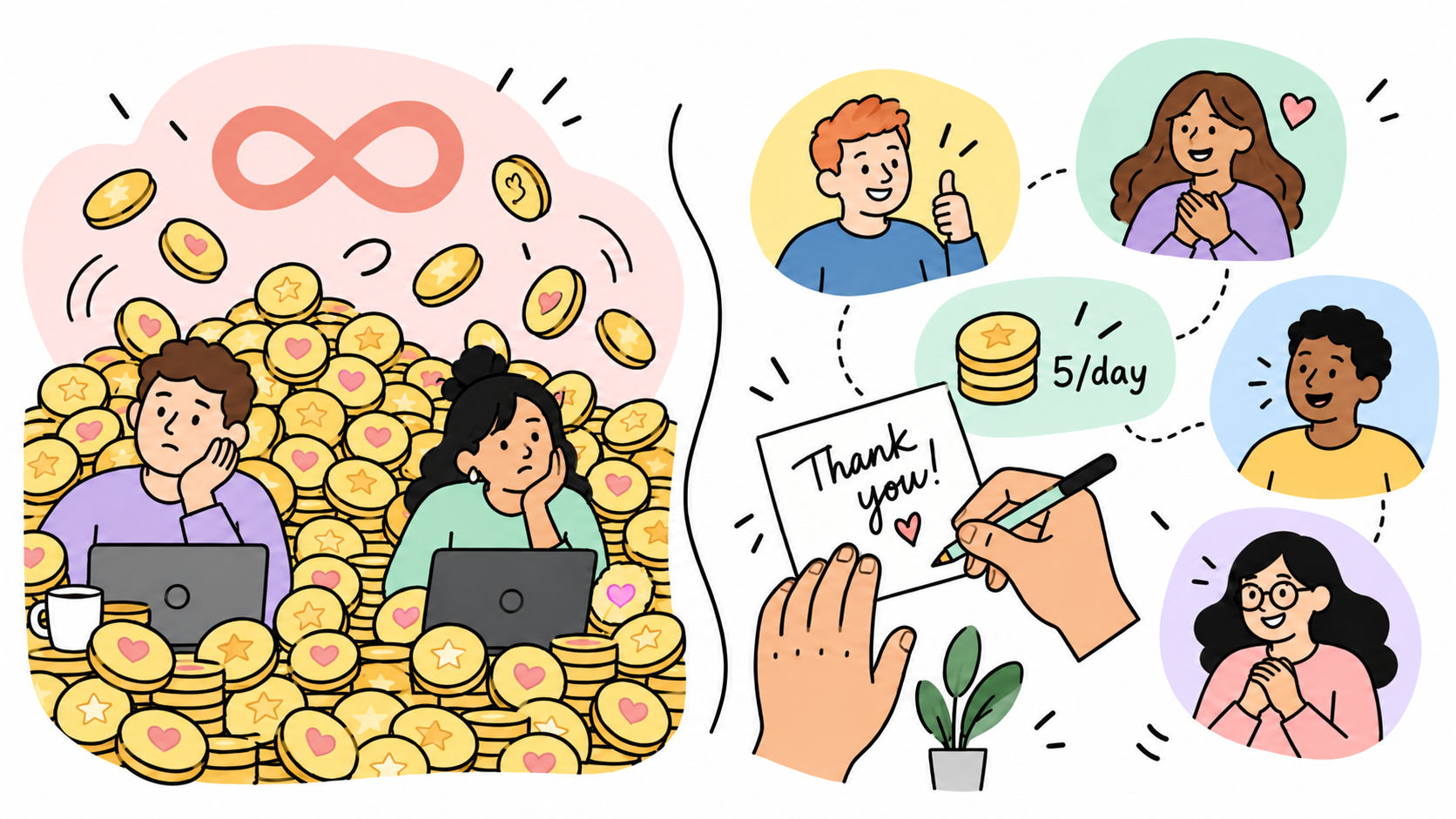

The unglamorous work is what we really want credit for. When people notice that, from peers to managers, that’s when we start to trust our surroundings. But remote engineers probably don’t want you to add another meeting to shout this stuff out.
(TL;DR)
- A healthy remote engineering team culture is responsive, respectful, and documents everything. People want accountability instead of blame.
- Excessive meetings and direct messages are kept to a minimum. Searchable conversations and sharp async communication are more useful.
- Building trust requires a different approach with code reviews and recognition. Reviews shouldn’t feel like personal attacks. Recognition shouldn’t be extra work.
What is “good culture” for remote developers?
Ask around! You probably won’t find “more virtual icebreakers” there, sorry. How you get there depends on many unique factors. Maybe a round of icebreakers can help periodically.
But the more durable remote engineering team cultures don’t make people feel dumb or interrupt them too much.
Enough psychological safety to say “IDK” in a PR.
Engineers who are afraid to be wrong are going to disengage. Good culture means you can say, “not too sure about this one” and get prompt responses instead of radio silence. It fixes problems earlier and reduces the nastier side effects of a competitive environment.
The power to make decisions and be accountable for them.
Shared ownership has its pluses, such as a teamwide investment in quality. However, it also pisses a lot of engineers off. The bystander effect kicks in, and no one acts to plug the hole in a sinking ship. Someone else will do it, surely!
A framework that includes Directly Responsible Individuals supports decisiveness and accountability without sweeping collaboration and collective purpose off the table. Fewer arguments, less resentment, higher efficiency, better culture.
Being remote-first (no moves toward HQ).
So you say this is a remote team. Are there situations (such as a promotion) where they’d have to relocate? If so, then your company is remote-friendly at best. Which is fine, except every engineer now knows that if they want to experience career growth, they have to keep an eye on job listings.
Culture for remote developers often begins with committing to the “remote” part. Be up front about what is or isn’t possible when it comes to snagging interesting projects or promotions.
Discover what HeyTaco can do for your team
See how HeyTaco makes peer recognition simple, fun, and impactful.
Explore HeyTacoAsynchronous communication for engineering teams
Async communication is necessary for people working in multiple time zones, but engineers in the same zone prefer having the option. It supports their focus and can help keep meetings to a minimum.
Advance plans
Documenting the planning process before coding will make those deep work hours more productive and free-flowing. Peers have already introduced feedback, edge cases have already been nuked, and we didn’t need to schedule or make a meeting.
Searchable records
Slack channels, ticket systems, Wikis, and other resources are useful to everyone every day. However, they’re also a huge retention driver on engineering teams. If a new hire can figure it out on their own by searching for a minute, they’ll feel more confident and less annoying/clueless.
Clear titles and language
This benefits searchability and someone’s willingness to read ASAP. Be descriptive and think of what your written content’s keywords should be. Peers will use this to decide how important or relevant your message is. It also cuts down on async back-and-forth.
Recording walkthroughs
Every remote team needs more context, and in some cases, video is appropriate. Add a human slant and nuance to complex bug reproductions and overviews without more meetings. You should also be using Loom to do these if your written text has been described as “curt” or “snippy.” (Yes, we know, it was a misunderstanding.)
Decision logs
If you want to streamline discussions and prevent circular arguments, optimize those ADRs. Include why this choice, what alternatives didn’t make the cut, and what trade-offs did. We don’t want to rehash all of it when someone leaves, or the project details shapeshift.
Building trust during code reviews
Let’s put a magnifying glass on the “trust” part of this culture and center the discussion where it breaks down: code reviews. Toxicity, gatekeeping, and bottlenecks can occur here more than elsewhere, but not if we weave these considerations into the culture’s fabric.
Questions and feedback loops, not commands and critiques.
“Hey, fix this null case.” Pardon? The problem isn’t that they didn’t say “please”; it’s that they’re ordering someone around. “What would happen if we handled this null case?” encourages trust-building conversation.
Automate the formatting nitpicks, please.
Okay, remember that curt, snippy tone everyone thought you took? Was this possibly, maybe, perhaps, connected to about a billion pull requests over commas? Peers are less likely to take automated notes personally. It’s also faster for async and creates teamwide consistency.
Set expectations for timing.
If people can set a watch by it, they’re less anxious about it. Less anxiety is greater safety, and this is where trust grows. Everyone should be aware of the author’s time zone, anticipated response times, and what the boundaries are around personal time.
Consider sorting feedback by level of priority.
Asynchronous communication on engineering teams can make people feel behind as soon as they log on. When we sort feedback, it reduces urgency and overwhelm. Almost as important is how it can take things that might be a personal preference down a notch.
Designing recognition for remote engineering team culture
If you’re serious about improving the company culture for remote developers, replace surveillance with recognition. Recognition makes actual contributions seen. Surveillance makes people frantically look as though they’re contributing. Here are your crib notes for getting engineers to participate:
- Specific. “Your Loom video walkthrough saved me from sacrificing my lunch break.” Include exactly what they did and how it impacted you.
- Peer-focused. Anyone should be able to offer recognition at any time. It’s actually even better among teams who skew competitive, as praise from your “competition” feels bigger and more trustworthy.
- Tied to efforts. Unblocks, debugs, etc. should be recognized, not just shipping or overt disaster mitigation.
- Zero friction. Chat-native, already in the workflow, can be done in seconds. Otherwise, don’t bother.
Ready to make appreciation an everyday habit?
Try HeyTaco free for 30 days. No credit card required.
Try HeyTaco free6 Signs you’re building a successful culture
“Remote work” isn’t a monolith or an industry on its own. Belonging and connection on some remote teams includes daily catch-ups. Others stand out for their funny insider language, and some hinge almost entirely on continuous learning. Here are some examples of how it appears in remote engineering team culture.
1. Minimal status meetings. Recurring meetings mean documentation and context need improving. When meetings are necessary, there’s a real agenda.
2. Decisions are a matter of public record. And searchable, not gatekept in DMs. Technical discussions happen in public channels, too.
3. Recognition doesn’t feel forced. Peers thank one another daily, async and real-time, without it feeling like a big deal.
4. Your pings aren’t all “hey.” Messages lead with requests and questions so peers can respond when ready.
5. You’re respected offline. You aren’t expected to respond immediately outside of working hours and don’t need to justify stepping away.
6. Fixes, not finger-pointing. Post-mortems don’t make way for a culture of blame. Instead of assigning fault, we focus on team education.
The peer recognition tool that’s engineer-tested, engineer-approved.
Appreciation can be part of any workflow. That’s what Luis Sanchez, a Senior Software Engineering Manager at Deputy, was after when looking for a way to do daily shoutouts.
After introducing HeyTaco, he had peers in five different countries expressing gratitude every day, with one Slack-native tool. “Engineers just loved it, and it really worked,” he recalls. “People in that department started giving tacos to people in other departments.”
“They’re the key people driving this culture forward,” he says of Deputy’s top taco givers. “At the end of the day [this culture] is just showing appreciation and gratitude and saying, ‘Well done’ to people."
Learn more about how HeyTaco benefits tech teams and start your free trial this week.