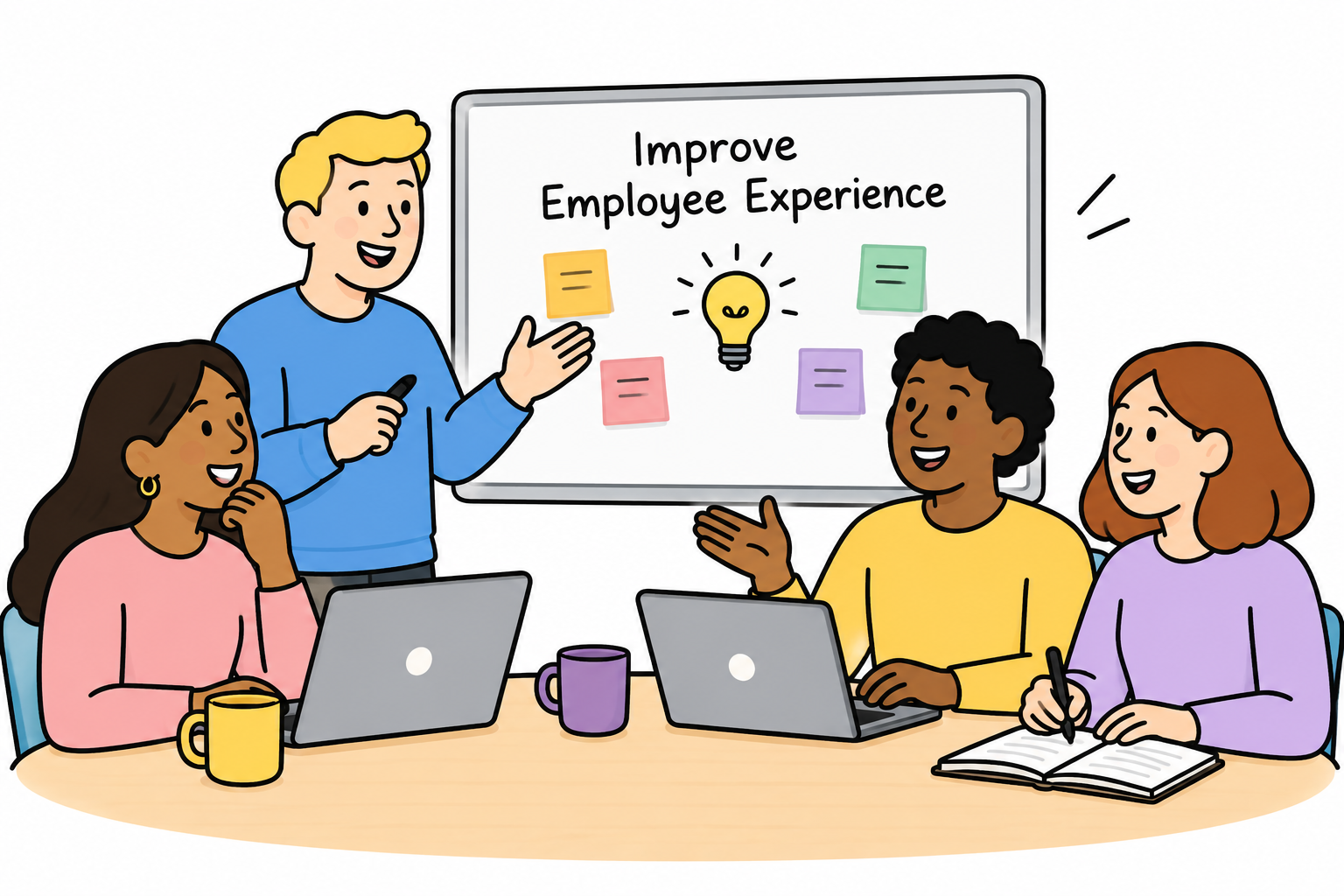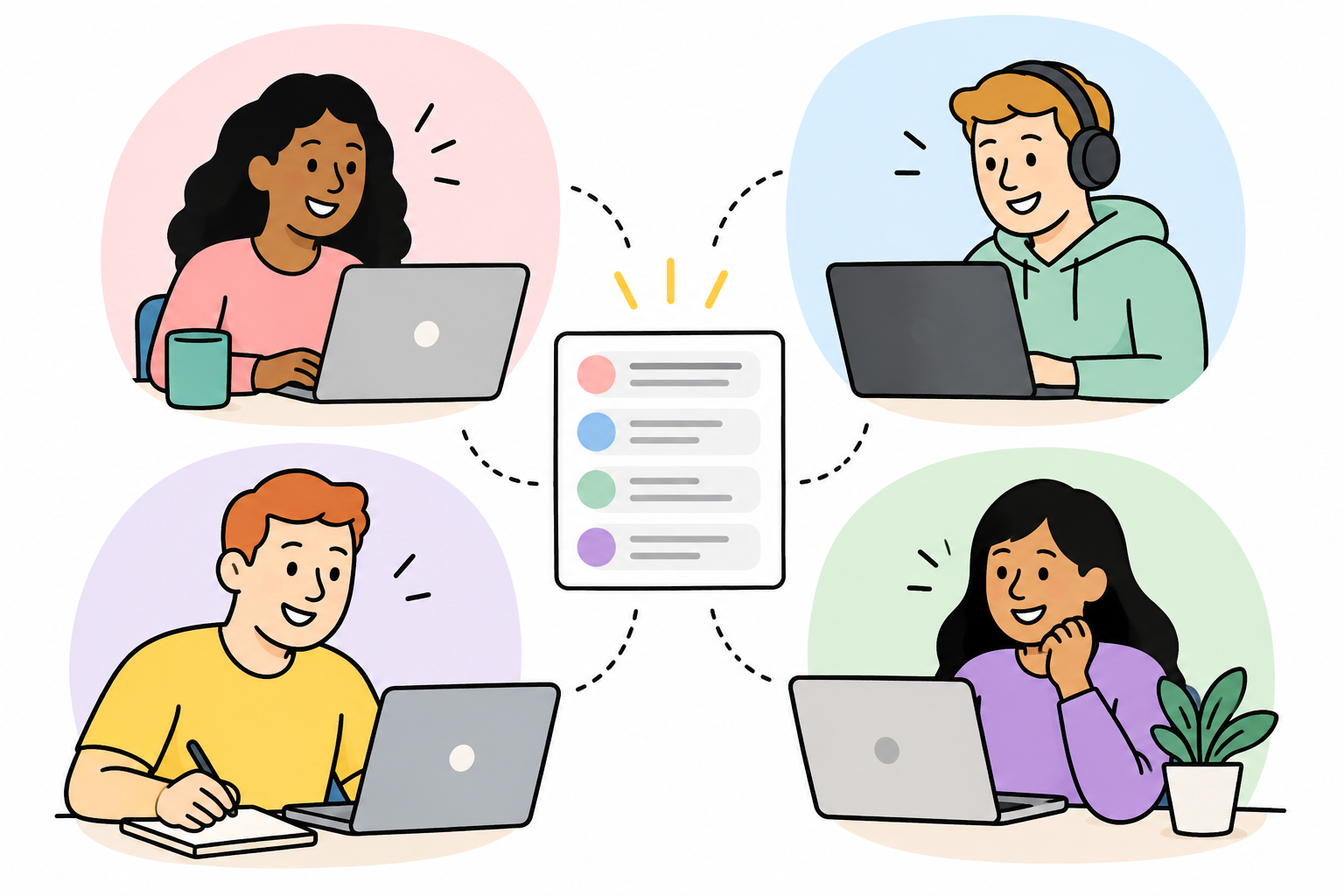

Old habits die hard, as the saying goes. There are plenty, from pizza parties to afternoon brain dumps, that make going remote-first sound tough. How do we preserve retention, engagement, and collaboration without renting a space to facilitate good work?
TL;DR
- Remote-first culture is async-friendly; remote-friendly requires an office somewhere.
- Going remote-first seems more flexible, but requires disciplined documentation and communication guidelines.
- For a small business, remote-first transitions can be smoother and more affordable.
Remote-friendly vs. remote-first: DNA differences you can’t fake
A remote-first culture never depends on a physical office or headquarters. No processes hinge on the availability of a commercial lease. That is the most concrete way to tell the difference.
There can be more nuanced differences, too, like the following. All of them are remote-friendly, not remote-first:
- Slack is for sending messages, not record-keeping.
- You work at home, but decisions are happening at HQ.
- Visibility and presence are most essential to trust.
- The company’s tone around remote work makes it sound like a perk.
How can a company successfully transition to a remote-first model?
You don’t want to give up the live Thursday all-hands. You’re worried the team will instantly be siloed. How will everyone brainstorm? Going remote-first requires more discipline. But new habits such as documenting everything and judging people based on their work (in practice, not principle) can be a net positive.
Here’s a breakdown of how various categories of operations differ in remote cultures. It’s your best first look at what would need to shift during a successful transition.
| Remote-Friendly | Remote-First | |
|---|---|---|
| Meetings | Office-based with video attendees. Decisions made during the meeting may not be documented. Plenty of “if you weren’t there, you wouldn’t know” moments. | Zoom/Teams link sent by default. An agenda usually precedes or accompanies the invite. Decisions are documented. Loom available for status updates and async attendees; real-time is for discussion. |
| Communication | A tap on the shoulder or hallway chat in the office. DMs with a quick question and daily email recaps are common for hybrid teams. Remote employees may miss some context. | Public channels and threads rule. Questions, solutions, observations, and more can be indexed and searched so communication becomes firm async-accessible knowledge. DMs are personal. |
| Documentation | Knowledge is best shared by shadowing the right person. It often leaves when they do. Guides and templates are common, but not always comprehensive. Onboarding is feeling it out before fitting in. | Runbooks, how-tos, video clips, searchable archives, and annotated everything. Everything is documented because it shrinks approval chains and allows team members to operate more autonomously. |
| Recognition | Hybrid and remote-friendly teams can enjoy a broader range of recognition types and team-building activities. More likely to experience praise in 1:1s, reviews, meeting shoutouts, meetups, and awards ceremonies. | Praise is smaller and more informal, but much more frequent and culturally influential. The primary features of remote-first recognition are that it’s peer-driven and public. It’s tied to shared values and occurs in the same place where work happens, not off to the side or in a special setting. |
| Trust | Managers feel more physically present, cameras are on during video meetings, people are seen working at desks. Trust seems to grow alongside rapport, not just based on meeting deadlines. | Outcomes are the foundation of trust. These outcomes include met deadlines and quality work, but also a daily dedication to values, like keeping communications public and making good decisions solo. |
| Collaboration/Workflows | Requires more overlapping real-time hours. Tools like video conferencing software, user cursors for live edits, and virtual whiteboards aren’t very async-friendly. People in other time zones require more catch-up. | Structured, sequential processes create consistency and keep things moving when people are offline. Tools like Loom allow for instruction, viewing, and timestamped commenting in different time zones at all hours. Other tools integrate into Slack or similar, so five tabs aren’t needed at all times. |
Why should a small business go remote-first?
The costs associated with physical offices alone can make remote-first models sound like a dream. Not that it’s free; you’ll have to consider the cost of software, stipends, and coordination instead of rent.
But if you’re serious about a transition, here’s why a small business should go remote-first in the early days.
It’s easier to apply the core principles.
The first rule of remote-first culture is documenting everything. If your team is still under 30 people, this can take a week. You won’t have as many processes to rewrite.
Less drag from bureaucracy.
With remote-friendliness, a company adds a new layer to usual physical operations and decision-making. Remote-first replaces it all, reduces the need for so much oversight, and can speed up productivity.
It costs to keep waiting.
This is the bottom line. Every second that we’re not remote-first, something goes undocumented. If you wait until you hit 50 team members, you lose much of what was already learned and can't carry it over.
Discover what HeyTaco can do for your team
See how HeyTaco makes peer recognition simple, fun, and impactful.
Explore HeyTaco5 Ways to transition to a remote-first culture without shaking the table
Micromanagement, burnout, and miscommunication are the three biggest threats when switching to fully remote operations. Here are five things smart organizations do to avoid them.
1. Onboarding processes that don’t leave new hires hanging.
We “learn by doing” from early childhood on. At many on-site jobs, we were invited to “jump right in” and acclimate on the fly. This is far less likely to be effective in a remote-first position.
Draft a clear 30-60-90 day document, but don’t stop there. When you’re new on a fully virtual team, information is belonging. Access to documentation and a daily understanding of expectations are more valuable than additional formal training. Over-structure those first weeks or months until you’re certain a new hire has caught the wave and is in alignment.
2. Protecting humans from burnout and improving engagement simultaneously.
At first it’s disengagement, then it’s burnout. People confuse flexibility with always being “on” or ready to pitch in. A lot of remote workers have to learn the difference for themselves and amend their habits accordingly.
At the same time, companies need to mind their retention and engagement rates. Stress management strategies like No-Meeting Wednesdays or digital detox weekends help protect boundaries.
Plus, stipends specifically for home office equipment. This helps ensure the employee you can’t see has the resources to create a dedicated workspace. Working from home makes it harder to mentally clock out of a job–especially if you’re logging on from your couch.
3. Making public praise and team rituals the informal norm.
Where appreciation happens in remote-friendly vs. remote-first cultures is secondary to how often. On-site and hybrid teams are accustomed to (but not satisfied with) occasional praise. On fully remote teams, it can be one of the only ways to know you actually exist.
Peer praise given in public acknowledges and affirms what everyone’s doing. Leaders model the behavior, employees pick up on what’s “good,” and keep it going. From this, we collect rituals, from Friday wins to milestone celebrations. Because anyone can chime in, it feels easy and natural.
4. Creating essential trust and autonomy through clearer core values.
Core values are an underrated way to secure the nuts and bolts of a remote-first culture. Keep a few of your organization’s current values, whether it be innovation and accountability. But tack on some that help make the transition a success.
“Default to public” contributes to searchable knowledge. “Write it down” supports documentation. “Decide async” is more instructive than “autonomy.” Reinforce this with recognition, keeping in mind that what gets praised gets repeated.
5. A tech stack that makes everything easier.
Slack, Loom, Notion, Asana. If your remote-friendly era included tools that didn’t work async, they’re out in favor of today’s communication and project management apps.
In many roles, having a bunch of tabs open is a blaring warning sign of operational inefficiency. Strive to have as many tools as possible integrated into the flow of work. That includes recognition apps; if people have to go out of their way to do it, it gets knocked down the list of priorities.
Real-life examples of teams that get remote-first culture right
No one does this by accident. The best remote-first cultures are successful by design. That design usually involves knowing when to hand the reins to the people so they can let their best team traits take over.
One example is BSC Analytics, a data analytics and cloud consulting firm. Their team of 80+ has been fully remote from the get-go. They created a dedicated channel just for daily peer praise. This surfaces work and builds trust. However, it’s also the foundation of many team rituals and celebrations, including an annual in-person retreat.
Being remote-first means all of this recognition, every positive thing that has sprung from it, is documented and recorded. It’s kept giving and gratitude at the top of mind, so much so that the team needs more places to put it. That’s why they added charitable giving to their recognition program.
Then there’s #paid, a creator marketing platform. They went remote-first post-founding, but thankfully before they’d grown to the 100+ people they employ today. The enhanced autonomy of being remote-first meant that employees didn’t have to be prodded into participating. They picked it up and nurtured it on their own.
Praise is also a driver of productivity at #paid. "When you feel recognized and appreciated, that's incredibly motivating,” says Bryan Gold, their CEO.
Ready to make appreciation an everyday habit?
Try HeyTaco free for 30 days. No credit card required.
Try HeyTaco freeHeyTaco is designed for a remote-first culture.
You don’t have to rebrand your organization. Remote-first environments are all about saying the quiet thing out loud.
The in-office observation becomes a written guideline. The DM about debugging is taken into a public channel. The smile and nod in the hallway becomes a “Thank you for making that meeting go so well 🌮” in chat.
HeyTaco is proud to help make it happen on thousands of globally distributed teams. With our award-winning, chat-native recognition app, daily usage is leaps and bounds ahead of the competition. And recognition that happens daily is part of every strong remote culture.
Learn what makes us different and start your free trial today.