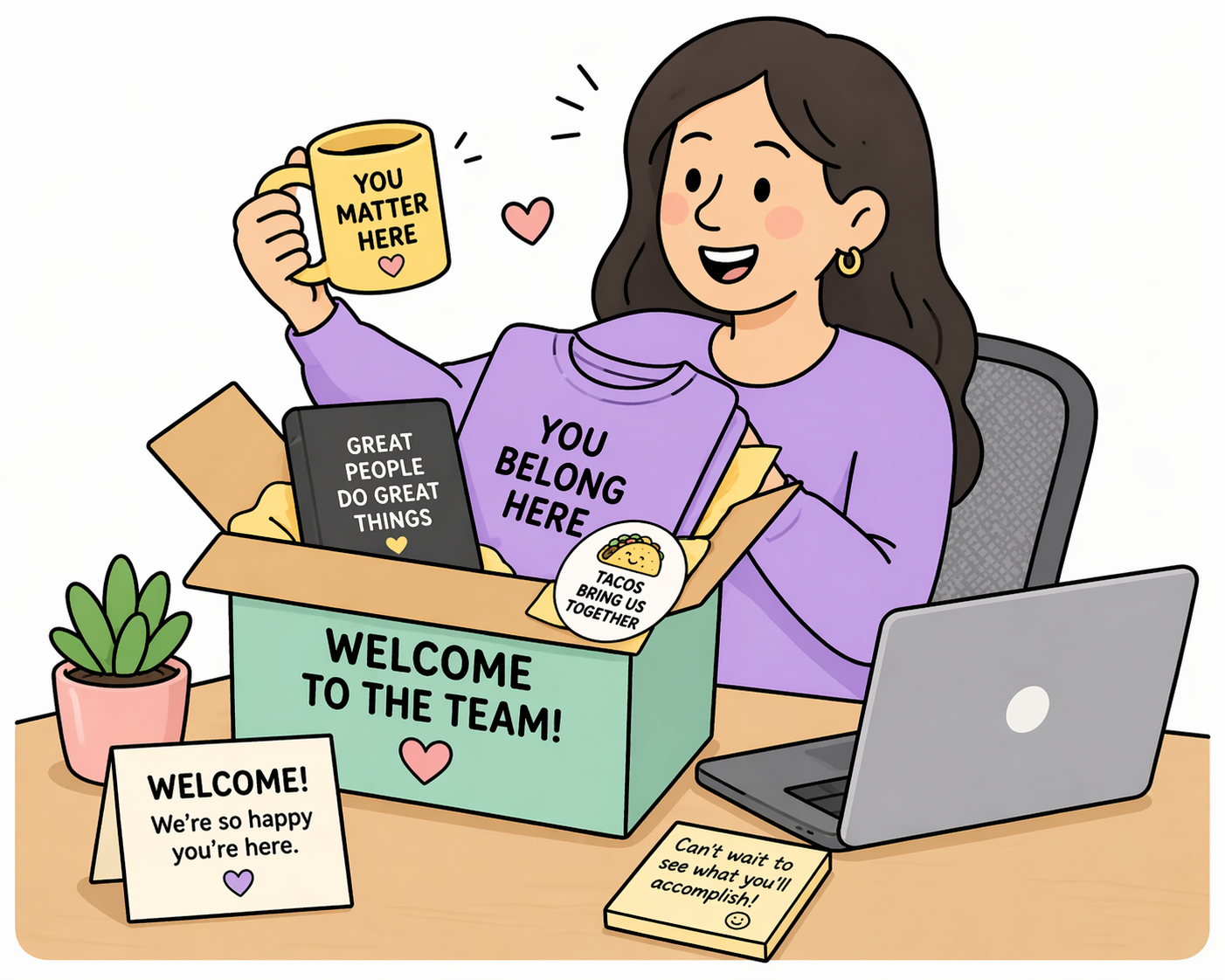

If you could scroll away with only two takeaways about team rituals, they’d be these. First, they work best when employees co-create them. Second, they’re one of the wisest time investments an organization can make.
It helps if your company culture already runs on gratitude, but rituals can be part of a new initiative to create one. Keep reading as we share why rituals matter, how they might differ in the workplace, and share easy team engagement ideas to try.
What do we mean by team rituals?
Team rituals in the workplace are intentional activities we carry out. Their purpose is to build connection and belonging and emphasize a shared identity.
Most importantly, we distinguish them from other processes. When rituals are distinct from the rest of our day, they stand out from our individual routines.
Team rituals also distinguish one team from another. The New Zealand All Blacks perform a haka before every rugby match. Walmart employees start their day with a cheer, and the Wisconsin Badgers football season kicks off with the whole stadium jumping to “Jump Around” at the start of the first home game. Those rituals tell us we are part of a team.
Why rituals matter: Creating a culture of belonging in the workplace
Your organization may already have some team rituals in place. Maybe you all like getting coffee from a particular place or do a company chant before the shift starts. If so, your teams are more likely to find their work meaningful.
The psychological benefits of workplace rituals
Rituals increase job satisfaction for employees because they:
- Create a sense of belonging
- Help define their identity at work
- Motivate them to repeat positive behaviors
- Reduce burnout by making people feel supported
💙 It’s the small stuff that counts! Harvard research finds that rituals can increase how meaningful employees find their work by 16%. One custom studied was firing a Nerf gun when completing a task, showing that the best rituals are simple and fun.
How rituals support organizational success
As always, the psychological benefits for employees translate into better business outcomes. Team rituals can help:
- Increase engagement
- Improve retention
- Support productivity
🐣 Rituals bring us out of our shells. One organization introduced a ritual to their brainstorming sessions. If someone didn’t contribute, they’d receive a card that let them leave or skip the next session. Suddenly, the company’s quietest introverts shared some of their best ideas to stay part of the conversation.
What research says about rituals
Every Thursday after work, as you get out of your car, a gust of debris and foliage welcomes you. Every Thursday! Your neighbor mows, trims, and leaf-blows their property into manicured submission, and the clippings always blow across your path to the door.
“Sorry!” your neighbor says, smiling broadly and waving.
But then one Thursday, the yard is empty. You don’t notice until you put your key in the door. You pause and wonder if your neighbor is okay.
Ready to make appreciation an everyday habit?
Try HeyTaco free for 30 days. No credit card required.
Try HeyTaco freeRituals are everywhere
Even if we don’t necessarily enjoy a ritual, it still means something to us. They orient us within the communities we belong to and connect us to individuals with whom we share spaces and challenges. At least, according to Interaction Ritual Theory. This sociological framework focuses on repeated interactions that train our emotions and use symbolic forms of communication.
From an anthropological perspective, that aligns neatly with what rituals have accomplished over thousands of years. From the community-affirming reciprocity of a Potlatch ceremony to the cultural significance of your morning coffee, we are, in some ways, what we repeat.
Employees can easily create their own rituals, and whether management is aware or not, they likely already have. Wouldn’t it be better for everyone if leaders supported them? It could ensure that what they repeat includes everyone and aligns with company values.
Rituals increase organizational citizenship
The topic becomes more complex when we bring it into the workplace. Here, ritual activities can be boundary-blurring. We learn that Livy fosters seven animals at a time in her home. Steve can’t do trust falls because he miraculously survived a serious accident years ago. How we see everyone we work alongside, even our leaders, evolves.
It turns out this may be a necessary part of building bonds and, consequently, rituals that matter to us. Research indicates that seeing the human side of coworkers can increase our willingness to collaborate. Moreover, this type of bonding increases organizational citizenship, where employees are willing to go above and beyond.
Accentuate the positive in workplace rituals
So, will the leaf-blowing neighbor approach work in the workplace, where we iterate until they realize there’s a connection? Or do we just need employees to bond ritualistically to drive engagement?
Both of those approaches could work, but only to an extent, and not for job engagement. A recent study (and related research) offers insight into making rituals effective.
Simply put, rituals improve employee engagement when people have more positive experiences than negative ones.
What qualifies as a negative experience? It isn’t just about the quality of the catering, although that helps. Overall, employees have negative feelings about rituals when they feel forced or meaningless. When they did go the extra mile to participate anyway, they felt those efforts weren't appreciated enough.
Just like most other features of a successful culture of recognition, rituals must make sense. Employees must leave feeling valued as individuals and as part of a community.
⚠️ Important note: The above applies to what’s considered a complex ritual in the workplace. This would be team celebrations and other community events. Simple rituals, like sharing virtual tacos when the mood strikes, are safe.
How to make your own team rituals a success
Forced rituals build a tenuous connection. Team bonding helps, but a few negative experiences at meaningless rituals can easily undo it.
Here’s how to incorporate rituals that support retention and engagement goals while creating a more authentic sense of belonging.
First, identify team values
Teams that collaborate on projects may appreciate chances to brainstorm or support one another. High-performing teams that run on accountability might like rituals where everyone offers updates and reports progress.
Take time to observe behavior and consider what everyone’s workday is really like. Some team members may need more face-to-face interaction with coworkers. Others may feel rituals interrupt their work and throw them off. Keep this in mind when deciding what type of ritual (social or project-related) to use and when you plan to carry it out.
Test small rituals–SMALL
To begin, keep it brief and low-stakes. (We’ll share some team engagement ideas that meet that criteria coming up.) Starting small increases participation and reduces pressure to show enthusiasm. Employees will be sizing up the task or activity, so let them experience it before judging whether they like it.
And always, always express appreciation for their participation.
Choice and transparency
If employees regularly raise concerns about benefits, scheduling, or PTO, they’ll side-eye the money spent on things they don’t want and didn’t ask for. When you include larger rituals, like lunches, parties, and other events that cost money, bring them in on it.
Some organizations approach the team with a budget and suggestions. In these cases, we’re enabling a ritual, not creating it. It can be a fast track to better understanding employee values, higher participation, and a positive experience for everyone.
Keep adapting to the culture
Accept the team for who they are; you cannot build a community out of people who feel they can’t be themselves. For instance, the term “icebreaker” can elicit eye rolls in some environments. Call it something else.
This is essential for keeping rituals relevant and meaningful. The bottom line is introducing a custom that employees can feel some ownership of. It helps to see what the team is doing on their own and amplify that.
For instance, they’re getting together and taking turns ordering lunch from certain places. This is a natural opportunity to create rituals with evenly distributed ownership, not just top-down.
Ready to make appreciation an everyday habit?
Try HeyTaco free for 30 days. No credit card required.
Try HeyTaco freeReal rituals: 7 team engagement ideas and examples for every workplace
A can’t-skip part of implementing any framework is testing out different activities to see what employees end up ritualizing.
To get started, here are seven ideas that can help create belonging in the workplace. Some are thoughtful, while others are thought-provoking. Some are light and fun, while others can get flat-out silly. All can work for remote and hybrid teams.
1. Weekly check-ins
It’s like a meeting, but management doesn’t hold the floor. One-on-one check-ins are also great. Check-in questions can help us measure progress, collect feedback, and solve issues. However, their best purpose is to engage with employees, get to know them better, and make them feel seen.
🙋🏼♀️ What should I ask? We have 50 meaningful check-in questions for you to check out. You’ll find options for every occasion, with plenty of opportunities for team members to learn more about each other and find common ground.
2. Targeted team-building exercises
Announcing that team building is about to take place may not lend itself to organic ritualization. However, suggesting quick activities at specific times (such as rising tension or a slow Monday morning) can catch on quickly.
🤝 Take five, team! Our lineup of five-minute team activities includes other rituals from this list. Plus, cool stressbusters like Emoji Decoder and the Surgeon General-endorsed Show and Tell.
3. Hello, hot takes
Advocating your point of view, challenging norms, and sharing laughter are all parts of eventually feeling a genuine sense of belonging. Hot takes are a great tool for this, where we share unique observations or (mildly) controversial opinions.
🥵 It’s getting warm in here! We've got a bunch of work-friendly hot takes to spice up meetings, breaks, and other dull moments, plus tips for pulling them off.
4. Virtual celebrations
Remote workers can’t wriggle out of being part of a team. Start celebrating milestones virtually with trivia nights, Zoom-enabled happy hours, and other online events that humanize screen-only coworkers.
🌎 How’s the weather where you are? From hackathons to book clubs, you can build team rituals from anywhere. These team activities for remote and in-person employees help build rapport, solve problems, and share common interests.
5. Paper plate awards
Awards feel great–if you’re the winner. Some organizations eschew old traditions like Employee of the Month because they don’t bring people together. Paper plate awards let employees nominate one another for unserious (but thoughtful) “awards” like The Spreadsheet Sorcerer and the Slack Savant.
🏆 Who’s hosting the ceremony? Book it this week, thanks to our paper plate award ideas, and let the team create plenty of their own. Everyone’s a winner!
6. Unusual icebreakers
Conversation starters can be a necessary pit stop on the path to building team rituals that feel authentic. Whether you have a bunch of new people or the culture is mid-transformation, icebreakers are a great starting point.
😎 Cool question! Have you ever accidentally texted the wrong person? That’s just one of 40+ icebreaker questions you can try in the team chat.
7. Taco Tuesday (Classic!)
You can create a real taco bar if you want, but HeyTaco’s rituals are more recognition-focused (and cheaper). Taco Tuesday is a standing weekly post that prompts team members to give virtual tacos and celebrate each other. It helps make recognition a habit, even among quieter people.
🌮 Let’s taco bout collaboration. Collaborative, fun workplaces easily adopt rituals like Taco Tuesday.
Team engagement tools that ritualize recognition
How do you know when a team ritual has taken hold? Well, try getting rid of it. Global digital agency Eugeniuses started a tradition of sending out their HeyTaco leaderboard every week.
Except for one week. One week, the project manager forgot to send it out.
“People were messaging me, asking if the tacos were still a thing!” she recalls. “They were worried I had taken it away.”
When employees own rituals, they don’t deliberate; they just do them. And when the rituals are simple, they’re much more likely to leave a positive imprint. Tools like HeyTaco make participation easy and non-disruptive.
Virtual tacos have become part of team rituals worldwide, even in places where they’ve never had a real taco. For example:
- Core Values Taco Challenge. A month-long challenge focused on one company value. It gives your team time to absorb what that value looks like in action and recognize it in others, tossing out a taco when they do.
- Tacos for Charity. In this team challenge, everyone donates tacos toward a shared charity goal using HeyTaco’s “Tacos for Charity” collaborative reward. People bond when they do good together.
- Monthly Taco Champions. Each month, celebrate the top taco givers on your team leaderboard. Winners get a fun, custom Zoom background to flex their Taco Champion status all month long.
We’ve got many more ways to support recognition, rewards, and team rituals in every organization. If you’re new to these parts, try HeyTaco for free.
Team rituals FAQ
What are the 5 pillars of belonging?
The five pillars of belonging at work are feeling welcomed, known, included, supported, and connected. Making someone feel like they belong starts during onboarding, is reinforced by company culture, and is strengthened through recognition.
How to create a sense of belonging at work?
Team rituals are one of the best ways to foster belonging in the workplace. In general, personalized recognition means people will feel seen (and accepted) for who they are.
Creating an environment where people feel free to share ideas and give feedback can also strengthen their sense of belonging.
What are the 5 steps of team building?
The five stages of developing or building an effective team are forming, storming, norming, performing, and, eventually, adjourning. This describes their stages of behavior as a unit.
The Lencioni model also assesses five behaviors: trust, conflict, commitment, accountability, and results.
You can find details on both in our team cohesion checkup.
What is an office ritual?
Office rituals are pretty synonymous with team rituals–you just have to be in an office. Celebrations, meetings, lunches, coffee breaks, orientations, and check-ins can all become office rituals.
However, organizations with a more corporate, less recognition-focused culture might also use “office ritual.” It can describe norms and habits at work that aren't tied to gratitude, bonding, or intentional connection-building.