This past summer, we surveyed 279 administrators at 232 organizations. More than 100 respondents mentioned collaboration and mutual support as key to their company cultures. It had us thinking: what else can sit alongside peer recognition to help build those coworker relationships?
TL;DR
- Virtual water coolers can be an underutilized tool for coworker relationships.
- Micro-moments that start relationships are missing on remote teams, making arranged video meetings feel formal and awkward.
- Small, positive interactions that create rapport are easier to share via text.
- Pairing up people on purpose also makes the experience more productive.
The main problem with traditional virtual water cooler ideas
Arranging a virtual water cooler conversation means asking someone to contribute social energy instead of building on it.
The initial invention of the virtual water cooler didn’t handle what most of us need to build up social rapport at work, and that’s phatic communication. A small wave, a “hey, how ya doin’?” that requires nothing more than a nod in response. These are positively charged, totally voluntary micro-rituals that de-pressurize future interactions.
The absence of phatic expression is filled by awkwardness in a standard virtual water cooler arrangement. We want to make introductions, but a cold calendar invite is rarely our first choice for building a supportive culture.
5 Ways to bring your virtual water cooler up to date
If you abandoned the virtual water cooler in 2021, keep reading. Here’s what we’re doing today to make it useful to async and fully remote employees who want to build authentic connections.
1. Make the meetup feel more voluntary.
The first thing that must go is the feeling that this is mandatory. Research tells us over and over that if a ritual is forced, people enjoy it less.
The negative taste employees get in their mouths isn’t only about being interrupted or the dread of yet another meeting on their calendar. It’s the fear that if they don’t do it, or show enough enthusiasm, they’re not a team player. They may look like a jerk compared to their more compliant, on-board coworker. Now they stand out as someone Who Doesn’t Fit In.
Arrangements where the call is optional and not the default are best. That alone can prevent it from becoming yet more proof that your culture is performative.
2. Remote means written, so let them text first.
So if it’s optional, they can simply say no. How does that help? Fortunately, the solution isn’t letting them ditch the whole scheme. It’s allowing virtual water cooler conversation to begin in chat.
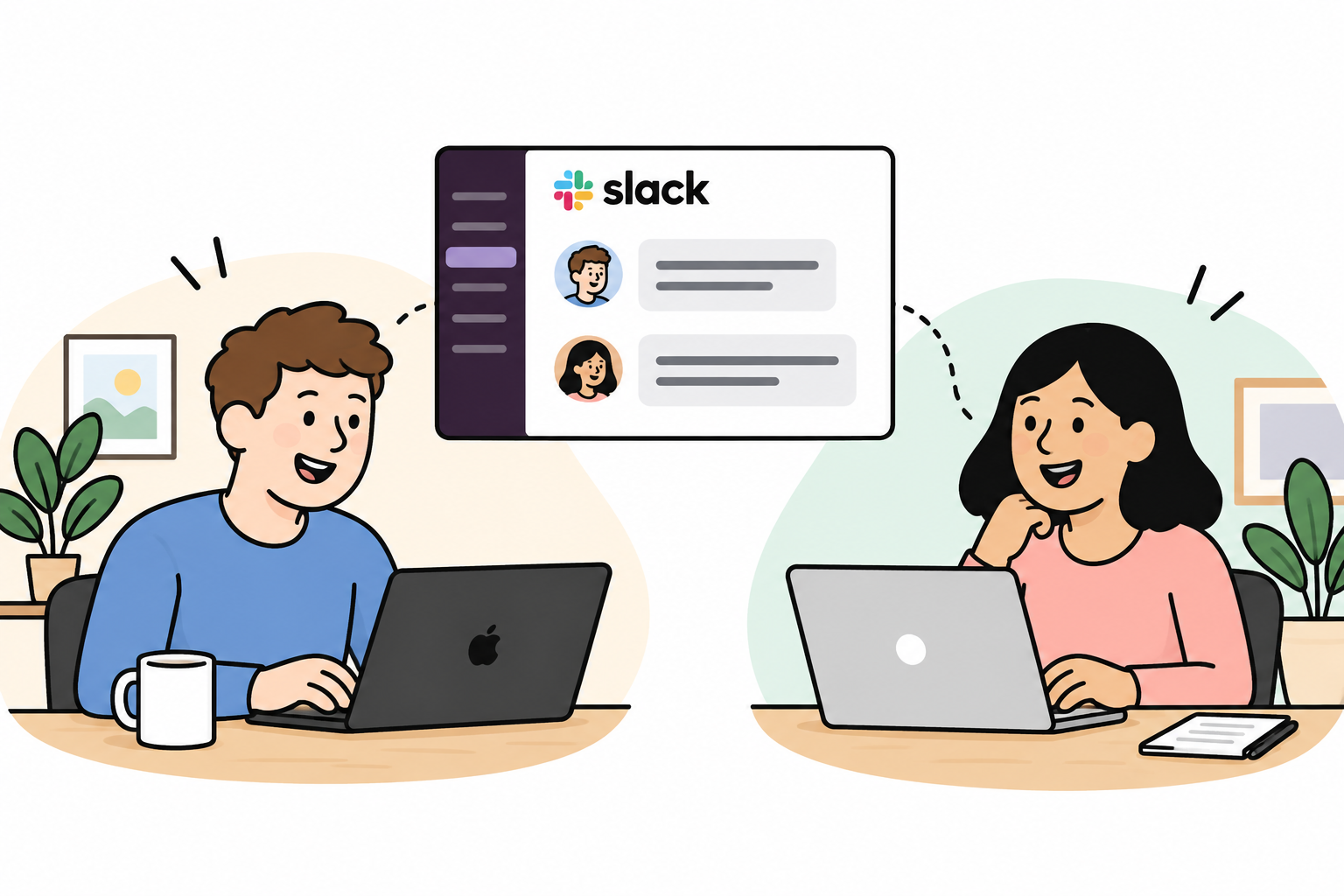
This is just good sense in a remote-first environment. When documentation overtakes presence in a digital workplace, texting first feels natural. It’s also the best time and place for virtual forms of phatic communication.
We want to avoid “hey” pings when we’re working and have people get to the point. But emojis, small talk, and non-informative banter are right at home here.
Ready to make appreciation an everyday habit?
Try HeyTaco free for 30 days. No credit card required.
Try HeyTaco free3. Use data to create better pairings.
One of the main features of familiar water coolers is randomized pairings. This is lazy and inefficient in a time when data is everything. The scant studies we have on virtual water coolers focus on intentional pairing as the strategy with the most impact.
Factual information like recognition data can help create cross-functional connections, or unite two team members who by chance have never interacted. Mergers and growth spurts can also create teams full of strangers overnight. A tool that knows who’s making first contact is more likely to produce the intended outcome.
4. Add facilitation that makes sense for your team.
A point of resistance with text-based introductions is that it can be a little dry and too phatic. Even when we lower the pressure on async employees and introverts, the whole “what to type” thing is a time waste that turns us off from future virtual water cooler ideas.
Text-based icebreakers lighten the load even further by giving everyone something to say. It can give deeper insights than your average small talk exchange. Say automated facilitation asks what’s changed your mind about work in the last year. Your chat partner says they used to dislike how a process went. They’ve recently realized they only disliked that no one ever asked for their input in building the process.
This tells you more about how aware someone is than whether or not it’s sunny where they are.
5. Stop paying for low participation.
We can make excuses about culture and preference all day, but a company’s bottom line is always just that. Paying for a tool that 80% of your team keeps muted is an obvious reason to drop it.
The organization’s experience matters, too. You should have the option not to pay for the people who opted out. Only paying for the connections that occur is the fairest pricing model.
Skip the awkward with Chats.
In the last four or five years, thousands of teams have abandoned their virtual water coolers. We’re bringing it back, so you have yet another fully integrated, chat-native way to build a supportive culture.
Taco Chats lets coworkers chat first and see how they like it. No cold calling, no calendar obligations, no random pairings. Just low-pressure, facilitated text